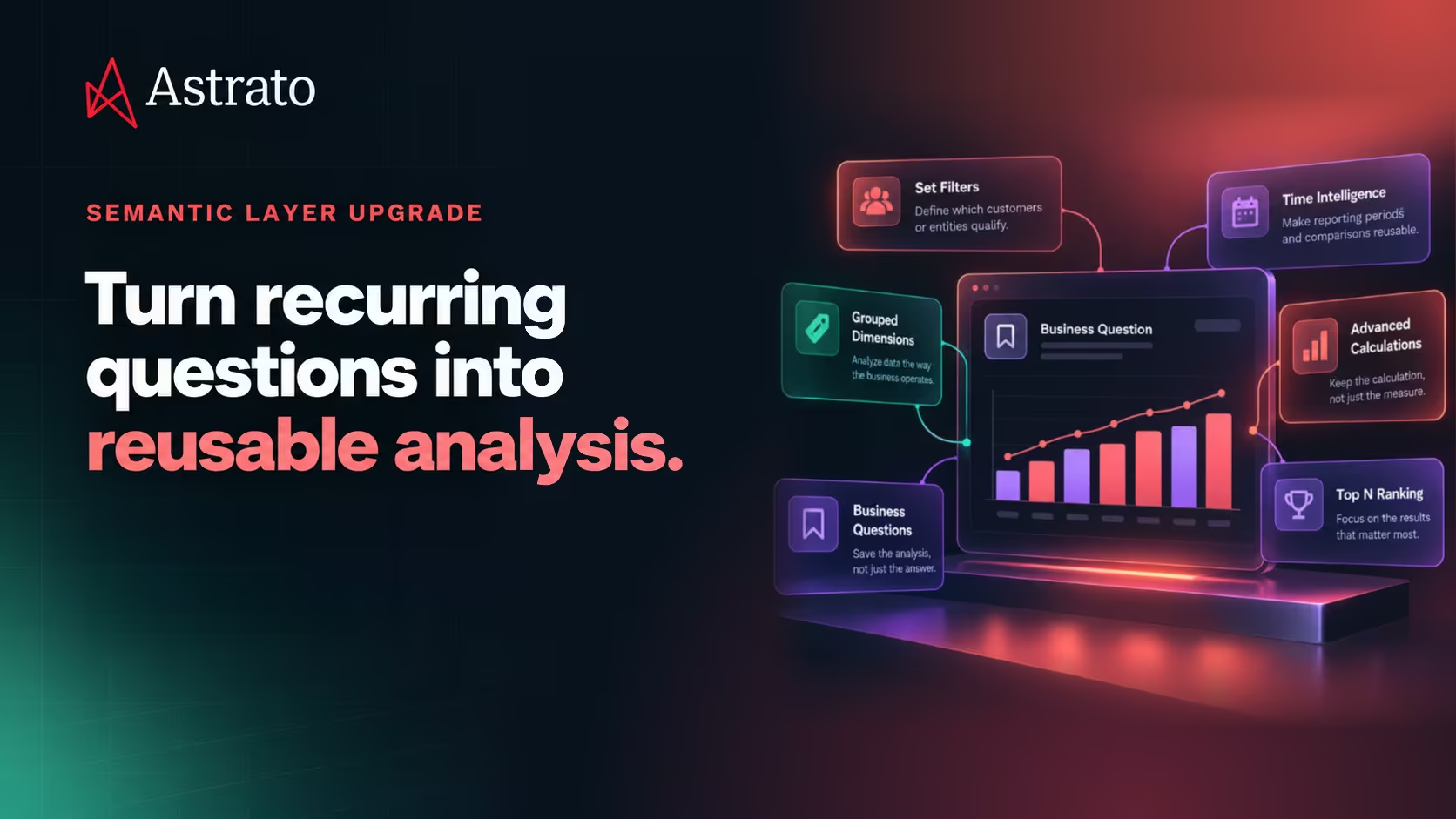
Discover Astrato's semantic layer upgrade: Business Questions, Set Filters, Time Intelligence and Grouped Dimensions for reusable analysis.
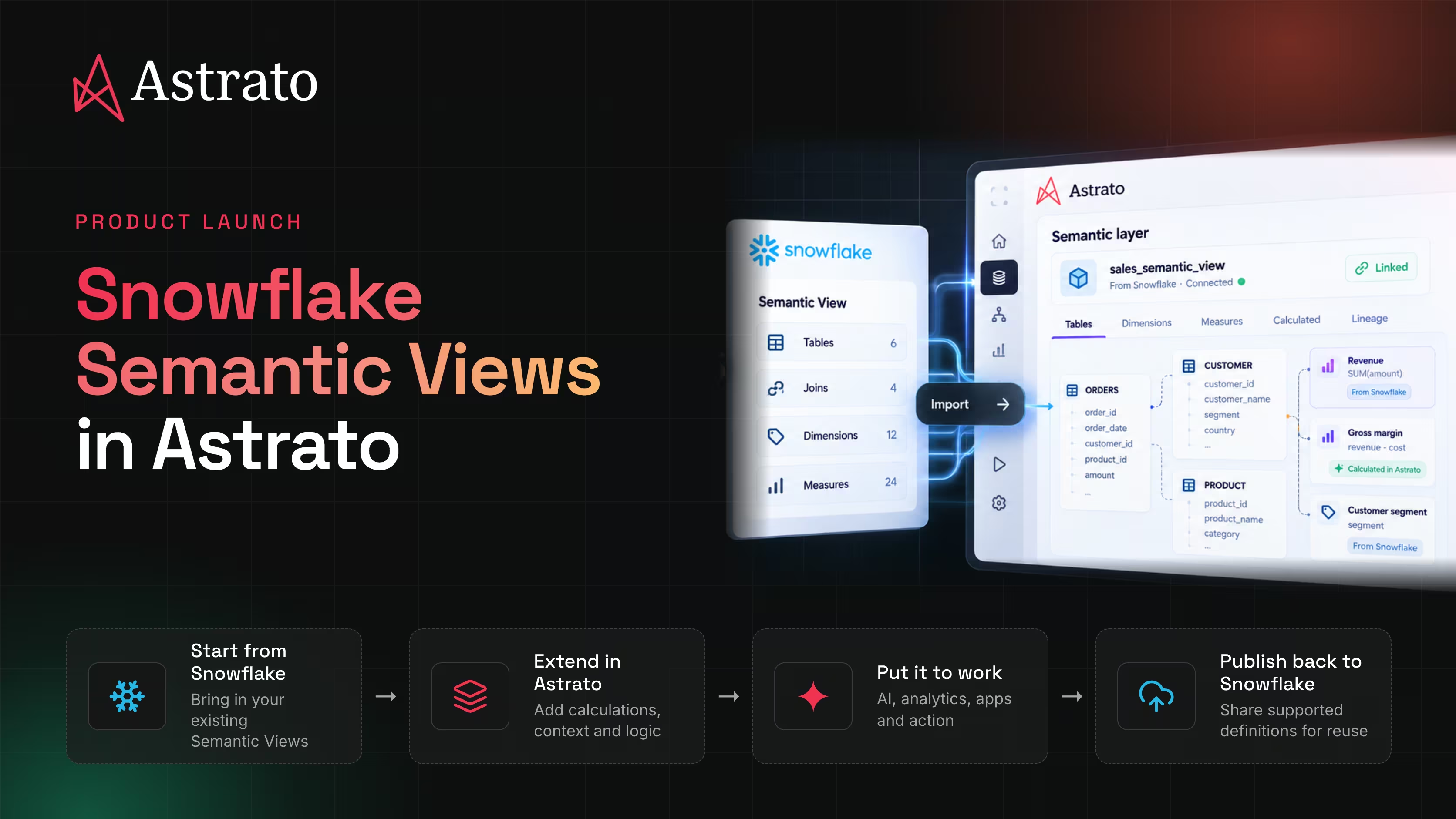
Astrato connects to your existing Snowflake Semantic Views, extends them, puts them to work across analytics, AI and action, and publishes supported work back to Snowflake.
Did you know you can add Snowflake GenAI Insight Summaries powered by Snowflake (and table/view reporting) to Slack & Teams, directly using Snowflake?
Looking for Omni Analytics competitors in 2026? Compare the 8 best Omni Analytics alternatives including Astrato, Looker, Sigma, and Hex for modern BI.
Looking for ThoughtSpot competitors in 2026? Compare the 9 best ThoughtSpot alternatives including Astrato, Power BI, Tableau, Sigma, Hex, and more.
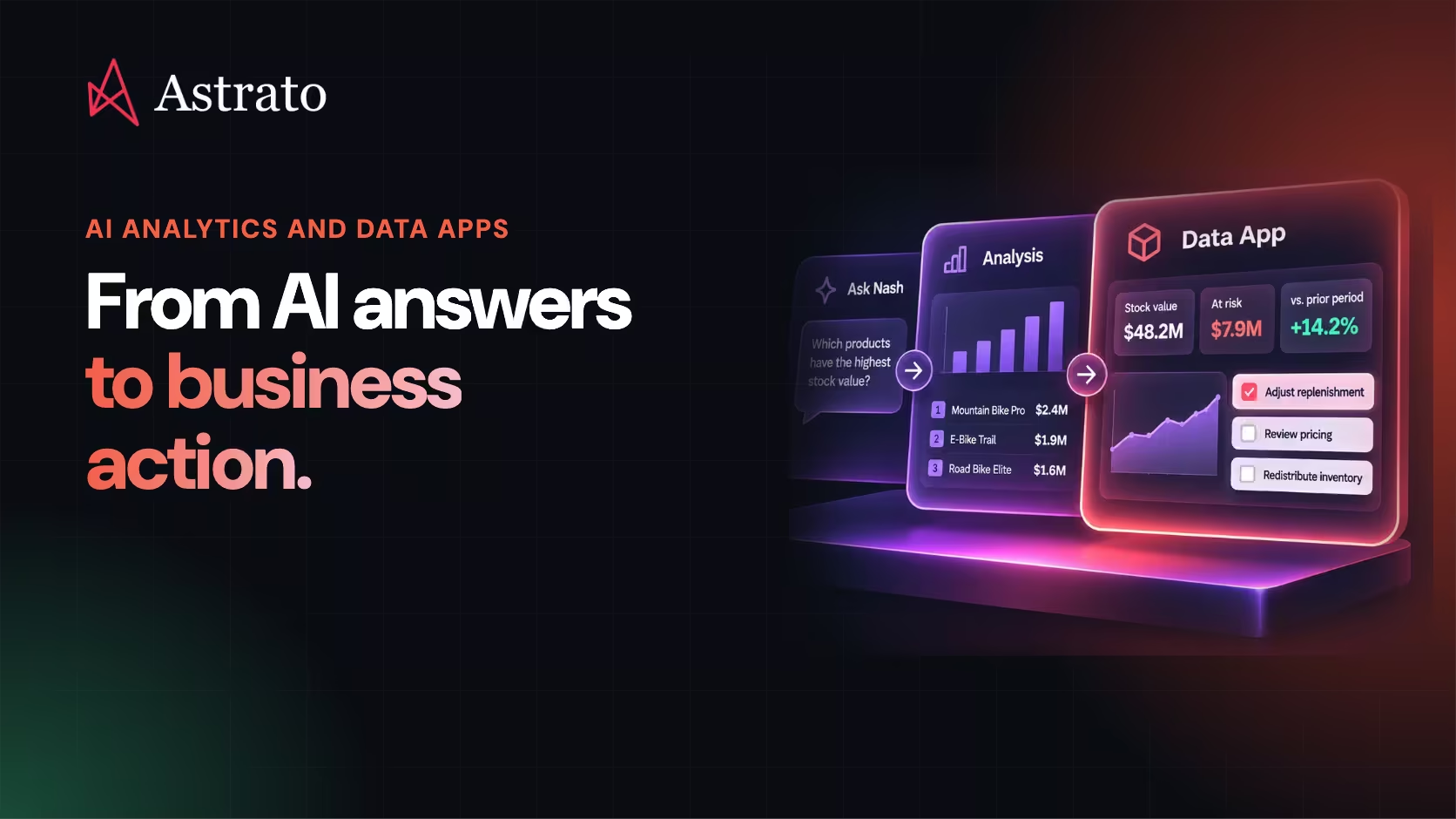
AI analytics can answer questions. Data Apps help turn those answers into business workflows. Explore how Astrato connects live data, business context, and action.
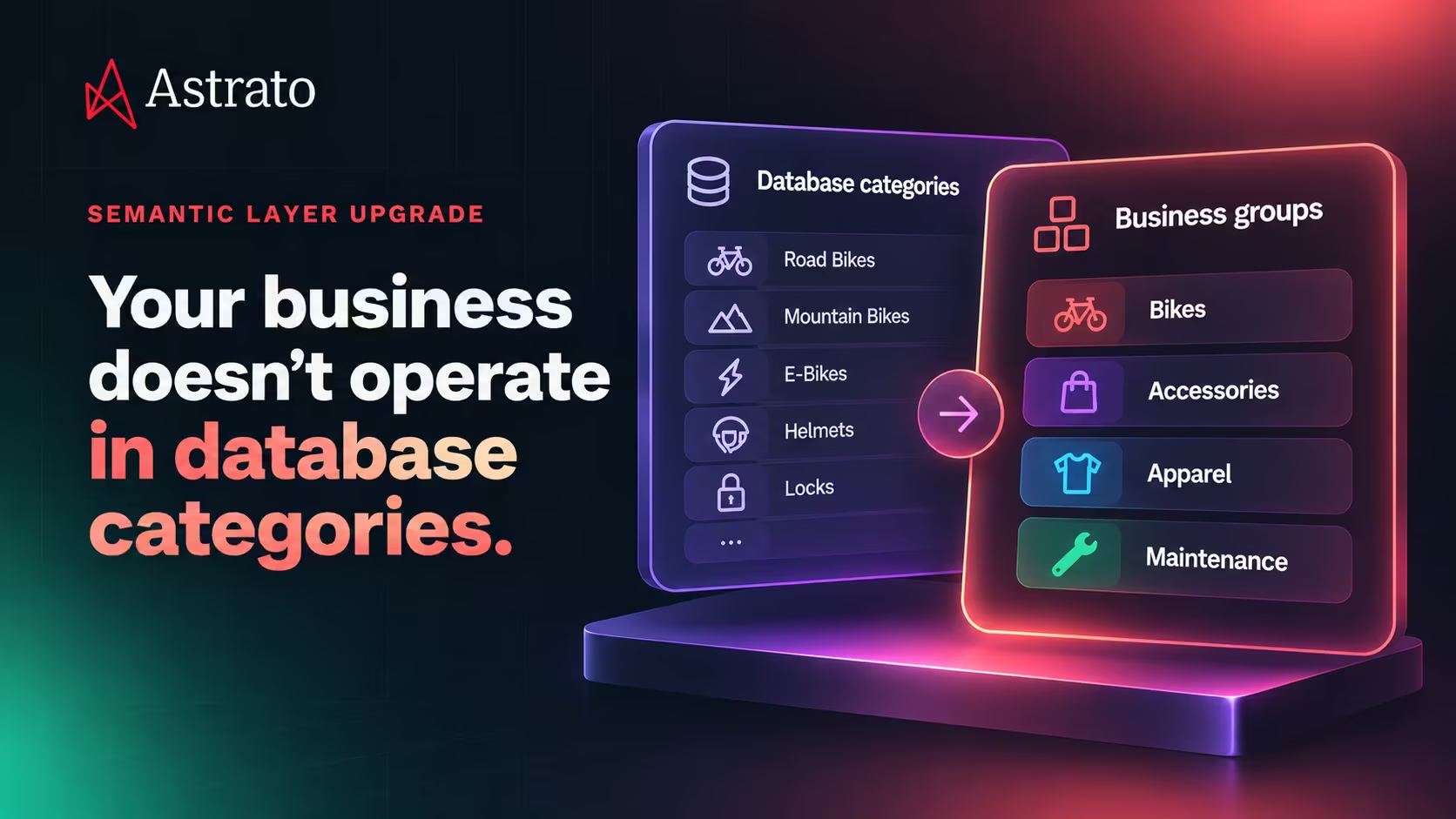
Raw database categories don't always match how your business operates. Learn how Astrato custom groups dimensions make your business groups reusable.
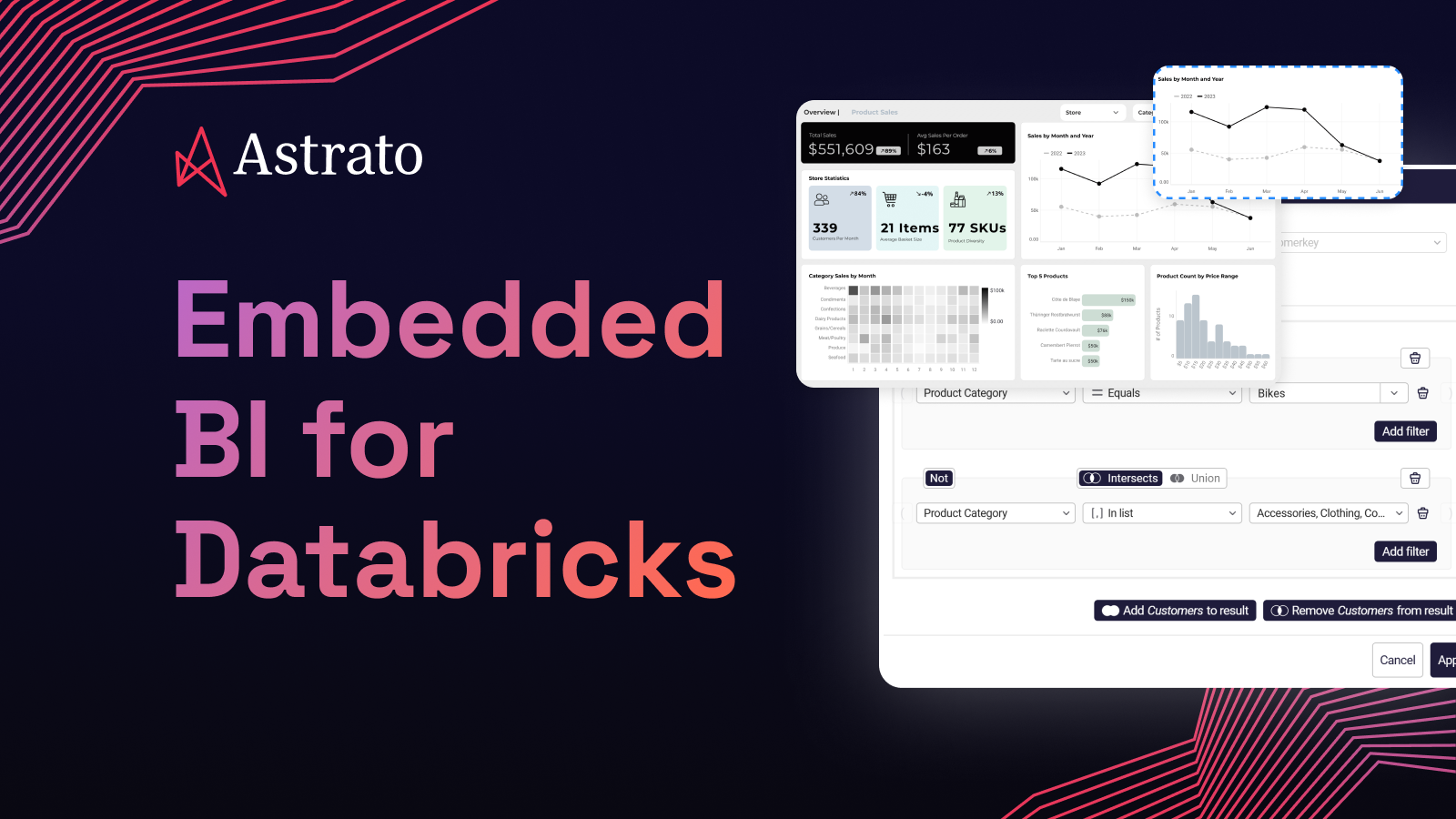
Databricks AI/BI now embeds dashboards externally. So when do you still need a third-party platform? A decision guide for data platform teams.
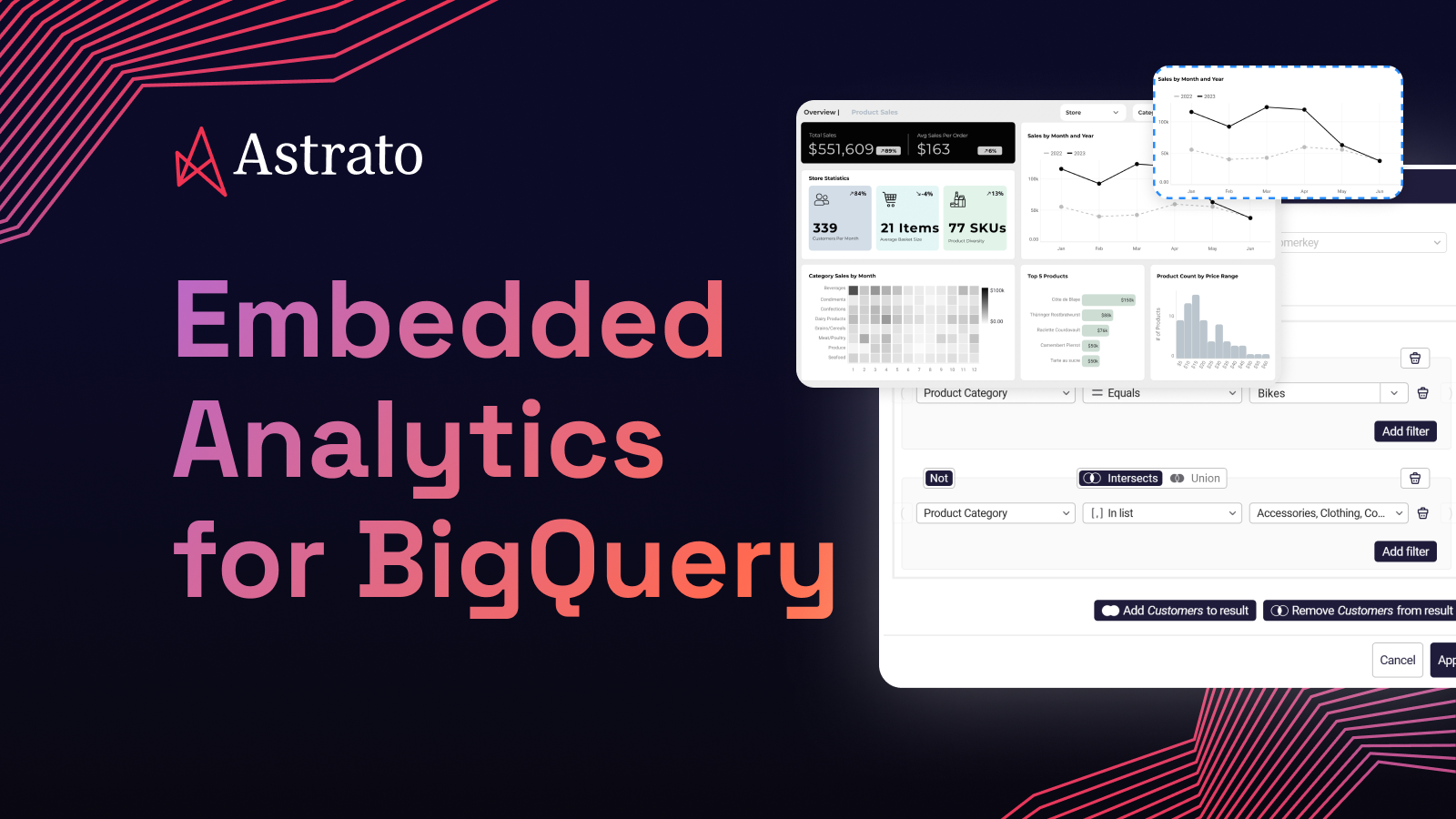
Compare embedded analytics platforms for BigQuery — Astrato, Sigma, Looker, Looker Studio, Power BI, Metabase. Built for product teams in Slack.
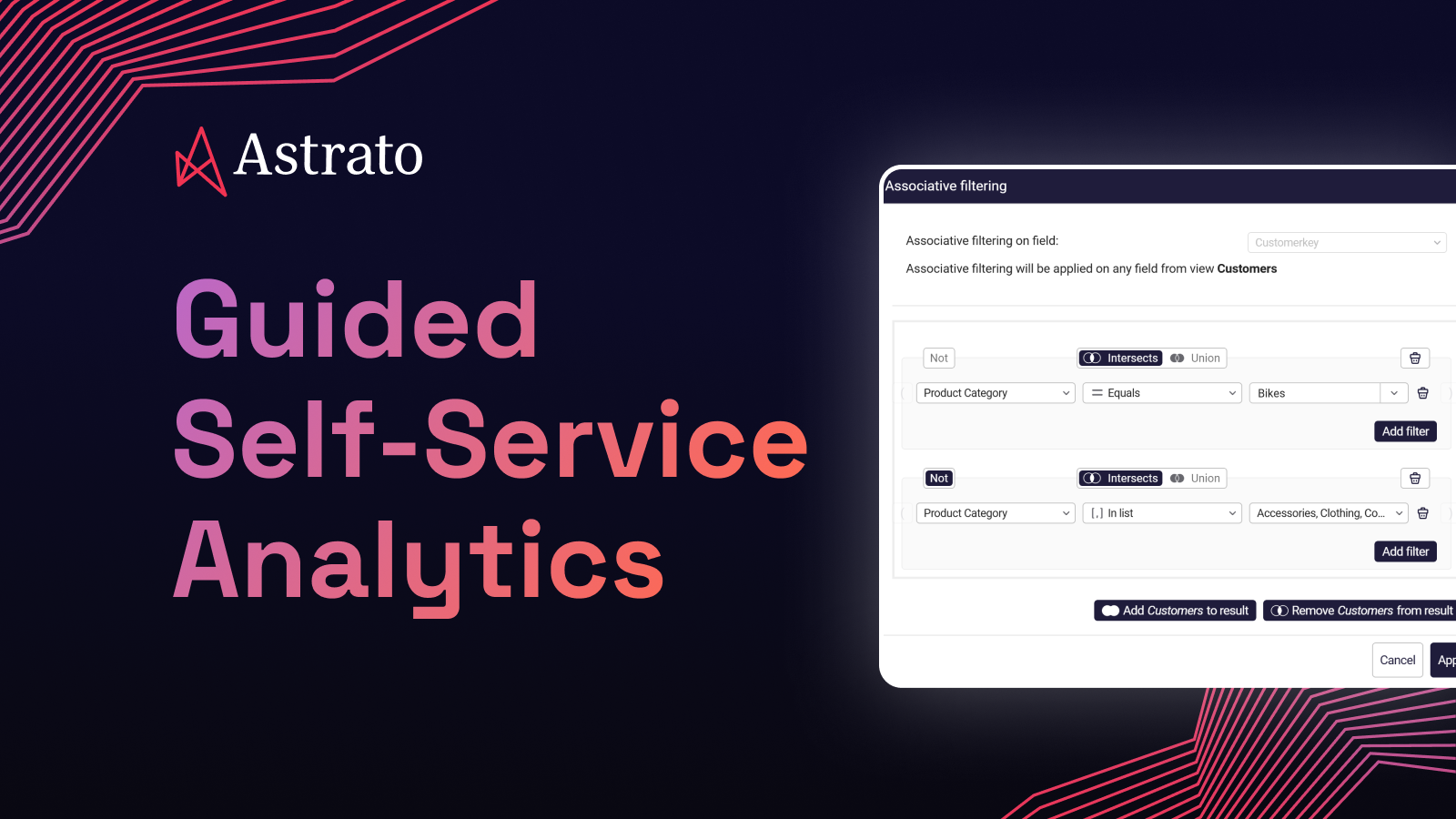
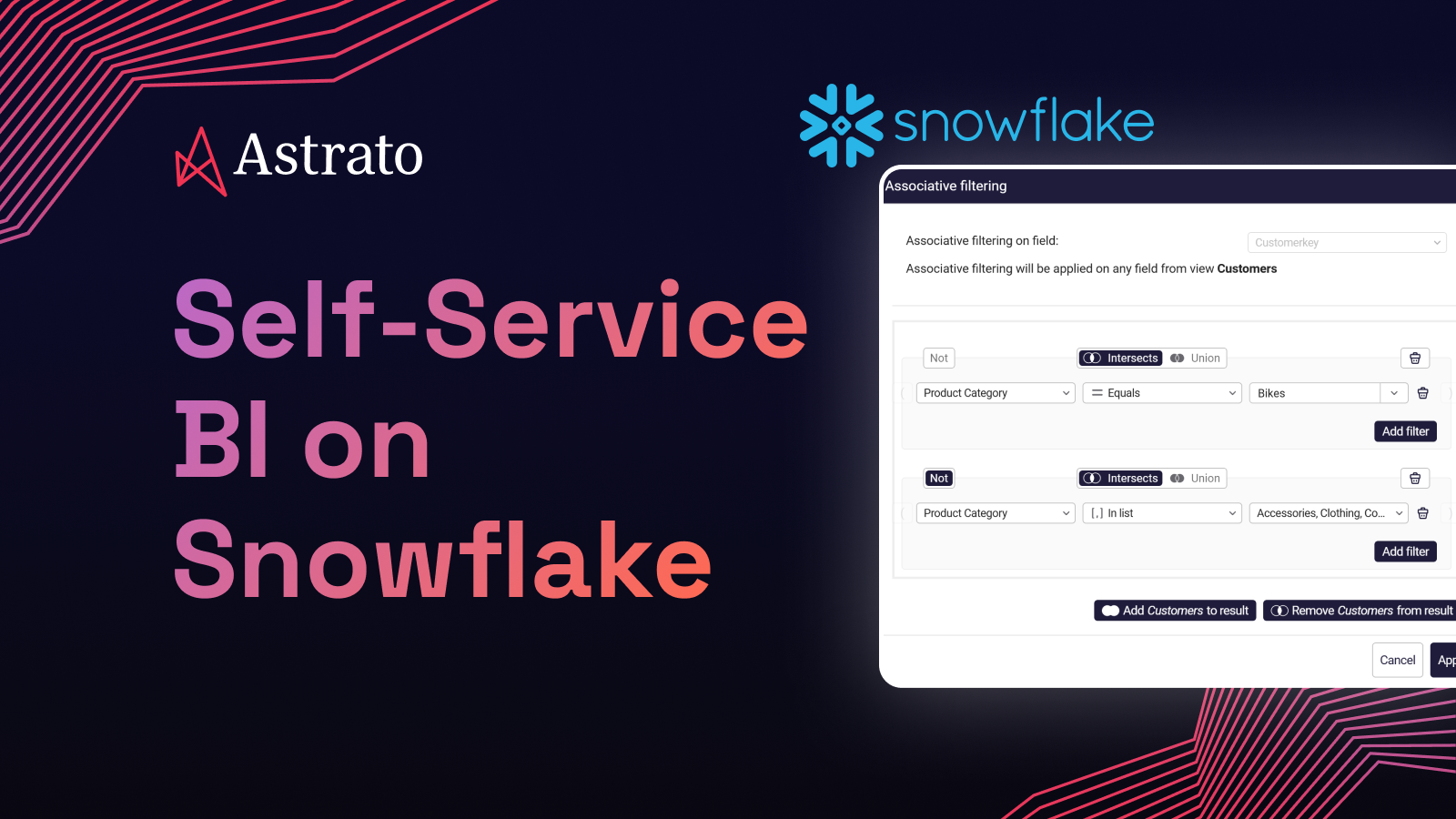
Self-service BI keeps breaking. Guided self-service fixes it: the data team designs the path, business users move freely within it. Here's how.
Every BI vendor claims self-service in 2026. A four-level spectrum, five evaluation questions, and an honest comparison of the platforms that compete on Snowflake.
The month-end close process step by step — reconciliation, consolidation, and sign-off — plus a checklist, challenges, and how finance teams close the books faster.
How finance teams build a budgeting and forecasting data app on Snowflake — governed inputs, writeback to Snowflake tables, and Snowpark/Cortex forecasting, all on live data.
Finance analytics workflows turn reporting, budgeting, and forecasting from manual spreadsheets into automated processes. Real examples, use cases, and best practices.
A semantic layer is the translation layer between raw warehouse data and the tools people use it in. Learn how it's built, and why it matters.
Examples of data apps — from finance and sales to operations, forecasting, and embedded analytics. See real interactive data apps and what each one does.
Dashboard vs data app: a dashboard lets you see your data; a data app lets you act on it. Compare the two across different use cases and when to use each.
A data analytics workflow turns raw data into decisions. Learn the stages, see best practices, and why the most effective workflows don't end at a dashboard.
A data app turns a read-only dashboard into a governed interface where business users act on live warehouse data. See how they work and real examples.
Dashboards show you what's happening. Data apps let you act on it without switching tools. What that means for your BI stack — and how to know you're ready.
Qlik Cloud is a real infrastructure upgrade. But the architecture underneath is unchanged. Here’s an honest read of what it fixes — and what it doesn’t.
Six BI platforms worth your evaluation when Qlik isn't the answer anymore — what each is good at, where each falls short.