
Ship customer-facing apps
on Supabase.
Connect straight to your Supabase Postgres and turn it into pixel-perfect, white-labelled apps you embed in your product.
Astrato's embedded apps are multi-tenant by design, live on your data, and with no warehouse to stand up. Your customers get the in-product analytics they expect, you ship it in days.
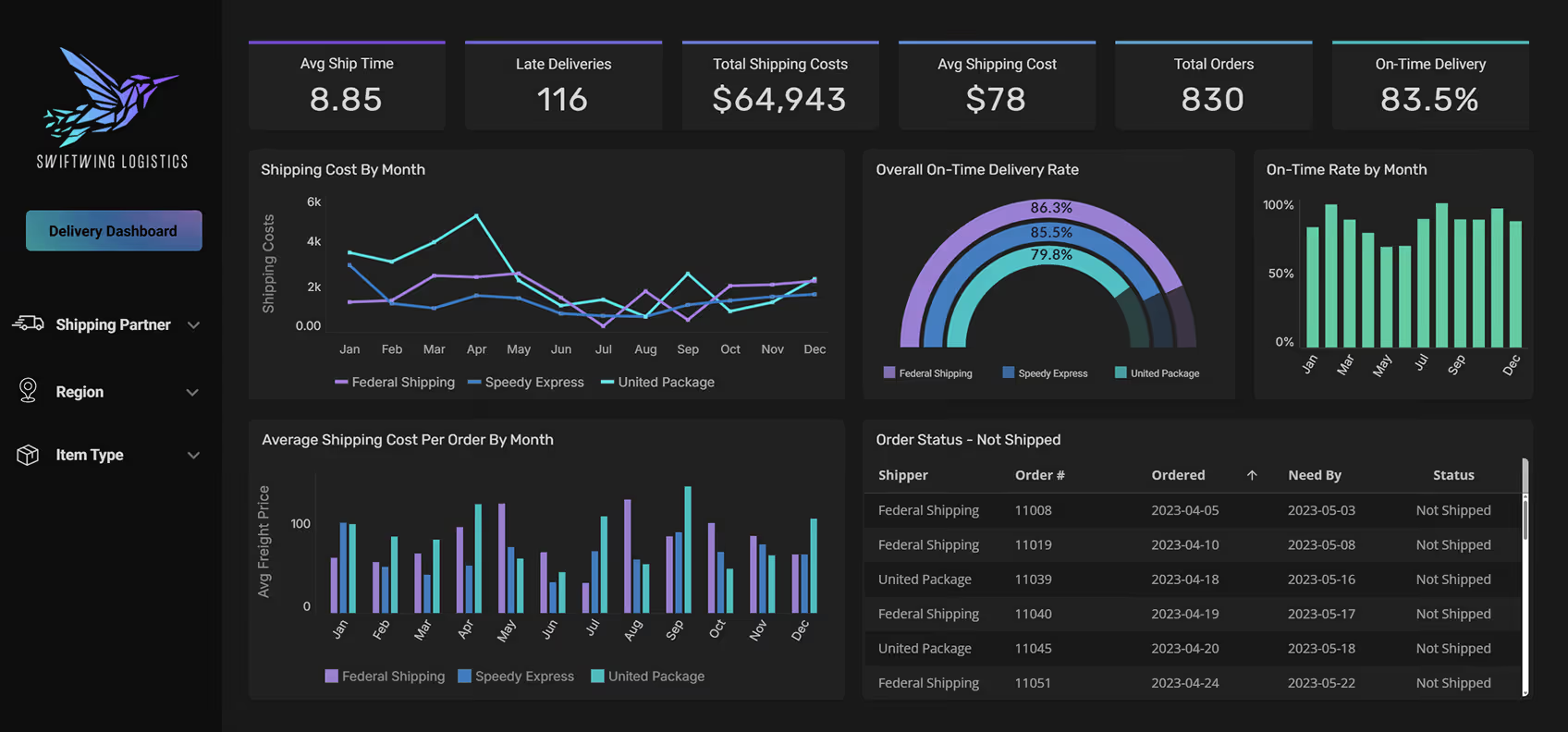

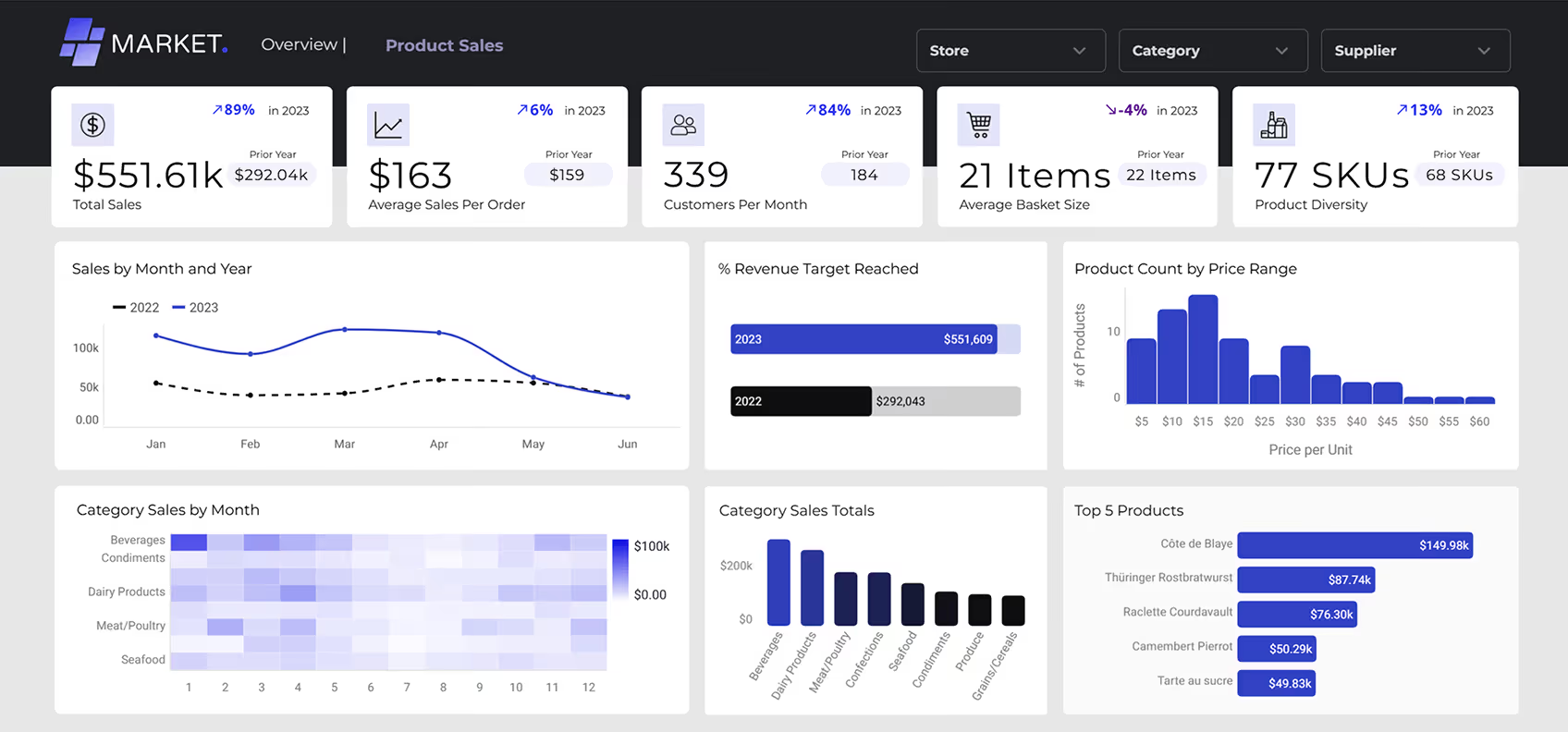
Embedded apps, native to your product
White-label everything
Match your brand to the last pixel – colours, fonts, layout, navigation. Apps look native to your product, not a third-party tool bolted on.
Multi-tenant by default
Each customer sees only their own data. Security inherits from your existing Supabase access controls – no parallel permission system to build.
Apps that act
Wire charts to Supabase Edge Functions and fire alerts, exports and workflows straight from an app. Insight and action in one place.

Supabase is brilliant at running your app.
But it was never built to report on it. Astrato is the app layer you add to ship in-product apps and analytics, without the heavy lifting.

Paste a URL. Query live. Nothing leaves Supabase.
Connect by pasting your Supabase connection URL and get it running in minutes. Astrato queries your Postgres live with optimised, auto-generated SQL built to keep apps fast without leaning on your production database.

Describe the app. Nash builds it on Supabase.
Nash, Astrato's AI assistant, turns a plain-language request into a working app – semantic model, pages and all – on live Supabase data. Each query runs inside that user's Supabase access rules, and you pick the LLM, governed feature by feature. Prefer Claude, ChatGPT, Codex or Cortex Code? Connect them through MCP and they work from the same governed definitions.
In-product analytics isn't a cost centre.
It's a feature you can charge for. The SaaS teams that win don't just add dashboards to cut churn – they package data as a premium tier, on the Supabase data they already hold.


To build a premium branded analytics experience, we migrated to Astrato + Supabase. The migration was seamless, the performance impressive and the costs extremely fair.

Everything you need to build business apps on Supabase
Semantic
Layer
On-brand visuals

Native
Writeback

Executive reports
Custom Report

AI insights in every app


Native Supabase integration
More than a generic Postgres connection – a dedicated Supabase connector. Paste your project URL to connect, query live with no extracts, inherit your row-level security, and fire Edge Functions straight from an app.
Connect Astrato to Supabase

Build your first app on Supabase

Frequently asked questions
We're on Supabase – can't we just build dashboards on our Postgres directly?
You can, until it hurts. Supabase runs on Postgres, an OLTP database tuned for your app's reads and writes – not for the heavy aggregations and concurrent dashboard queries analytics demands. Run those on your production instance and you slow down the app your customers are paying for. Astrato queries with SQL optimised for analytics and keeps that load off your app, so you ship dashboards without putting your database at risk.

Do you copy our data out of Supabase?
No. Astrato queries your Supabase Postgres live – no extracts, no replication, no second datastore to secure. Every app reads the current data, and your security policies stay exactly where they are.
How does multi-tenant security work – will customers see each other's data?
Each customer sees only their own data, because Astrato inherits the access controls you've already set in Supabase. There's no parallel permission system to build or keep in sync – your row-level security does the work, on every query.
Can we make the apps look like our product, not a third-party tool?
Yes, pixel-perfect. Match your brand down to colours, fonts, layout and navigation, then embed the dashboards in your app so they look native, not bolted on. Your customers see your product, not ours.
We don't have a data warehouse – is that a problem?
Not at all – that's the point. Astrato runs directly on your Supabase Postgres, so you don't need to stand up a warehouse or a pipeline just to offer analytics. And if you outgrow Postgres for analytics later, the same Astrato dashboards can point at a warehouse – your work carries over.
Won't live queries slow down our app?
Only if a tool hammers your production database, which is what Astrato is built to avoid. Its auto-generated SQL is optimised for analytics, and for heavier workloads you can point it at a Supabase read replica, so dashboards stay fast without competing with your app for resources.