
You modernized
on BigQuery. Your BI didn't follow.
You moved to BigQuery to leave behind extracts, stale copies and per-seat bills. Most BI tools just rebuild them on top – and still only hand you a chart to read.
Astrato ships what legacy BI can't: live queries on BigQuery and data apps that write data back, so dashboards don't just report, they act. No copies, nothing leaves Google Cloud.
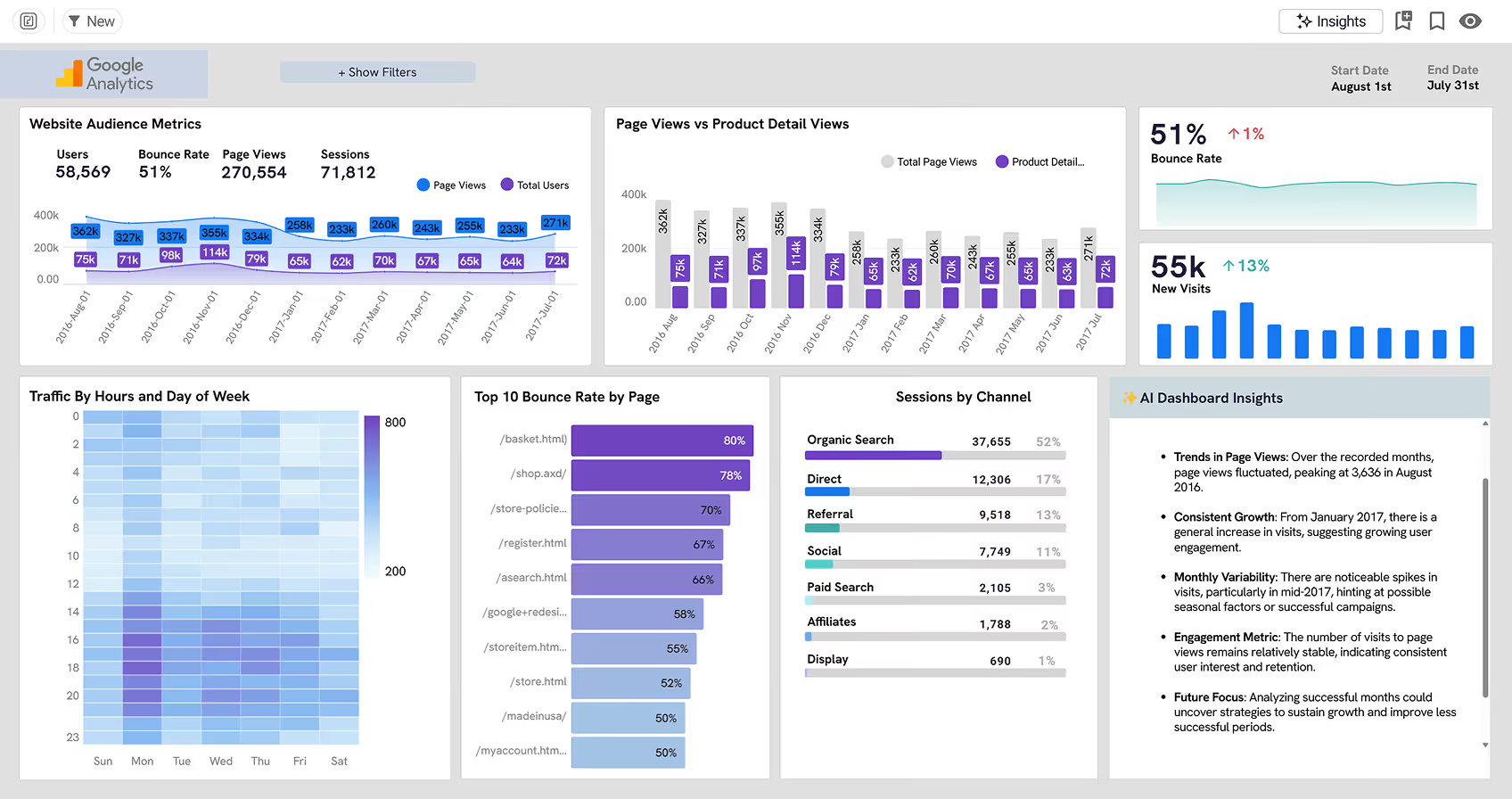

What teams build on Astrato + BigQuery
Data Apps & Workflows
Write back to Snowflake from any dashboard and chain no-code actions into guided workflows – approvals, forecasts, scenario plans. Act on insights on the fly.
Customer-Facing Analytics
Embed pixel-perfect, white-labelled dashboards in your product in days – multi-tenant by design, isolated at Snowflake's own row level.
Guided Self-Service
Business users explore live Snowflake data through no-code dashboards on a governed semantic layer – self-service that never breaks the numbers.

A modern warehouse with read-only BI bolted on top is half a migration.
Astrato is the half that finishes it – live queries and data apps, native to BigQuery.

Nothing to size, nothing to run – live from BigQuery
BigQuery is serverless, and Astrato keeps it that way: no BI engine in the middle, no warehouse to provision, no cluster to right-size. Queries push straight down to BigQuery and scale themselves from fifty users to five thousand, while repeat views come back from cache for free. Your dashboards, embedded analytics and data apps all run on that one serverless connection.

Deploy Nash AI on your BigQuery data
Nash AI is Astrato's agentic assistant that builds your governed semantic model and designs dashboards in plain language. Each query runs inside that user's Databricks access rules, and you pick the LLM, governed feature by feature.
The whole setup is a Google sign-in.
Sign in with OAuth and Astrato inherits your BigQuery IAM and row-level rules – no keys to hand around, nothing to provision. (Need service-to-service? A JWT service account works too.) Pick a project and dataset, name the connection, and your first live dashboard is minutes away.


We moved to BigQuery to modernize our data infrastructure… Astrato gave us everything we wanted – an intuitive UI that enables self-service across the organization, native writeback and a baked-in semantic layer for governed AI use cases.

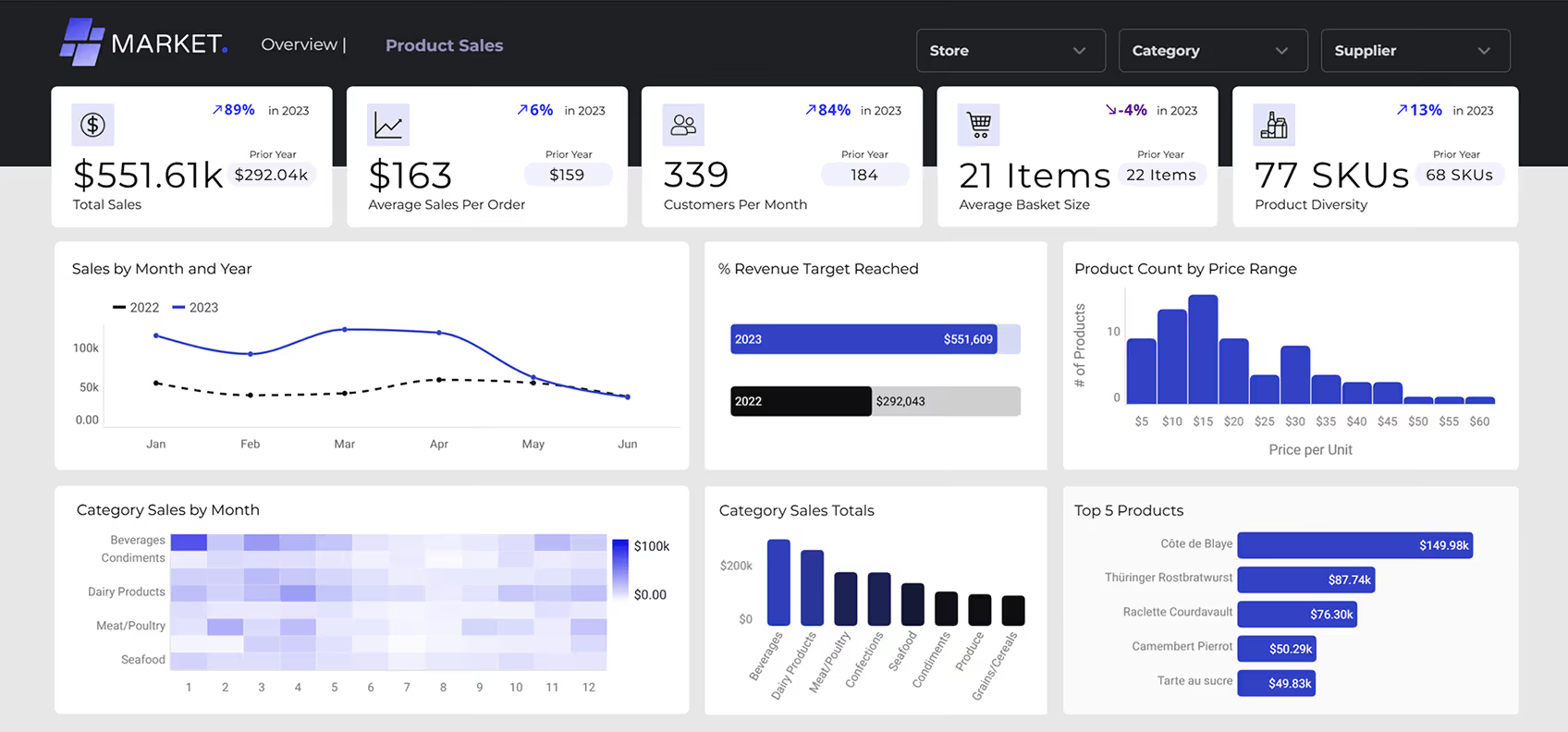
Everything you'd expect from an Enterprise BI on BigQuery
Semantic
Layer

IAM & Row-level security

Native
Writeback
Executive reports
Custom Report
AI-powered insights


Google checked our work – and called it Cloud Ready.
Astrato earned the Google Cloud Ready – BigQuery designation after a technical review by Google Cloud's own engineering team – validated against enterprise-grade standards for performance, security and governance.
Connect Astrato to BigQuery

Unlock the true power of Snowflake

Frequently asked questions
We're already on Looker / Looker Studio. Why add Astrato?
Because reporting is where they stop. Looker and Looker Studio are built to show you the numbers. Astrato is built to act on them – writeback, no-code data apps, approval flows and production-grade embedded analytics, all on the same live BigQuery data. Sometimes teams run Astrato alongside Looker rather than instead of it: Looker for governed reporting, Astrato for the work that has to write back, ship to customers, or move at self-service speed. But you can achieve both in Astrato.

Do we have to move or copy our data into Astrato?
Astrato queries BigQuery live – no extracts, no copies, nothing leaving Google Cloud. Every dashboard reads the current data in your warehouse, so there's no overnight refresh to wait on and no second copy for security to worry about.
How do security and governance work?
Astrato inherits them. Connect with OAuth and every user queries BigQuery under their own Google identity, so IAM permissions, row-level security and column masking all carry through automatically – there's no second rulebook to maintain, and nothing for governance to drift away from. For the IT review: ISO 27001, SOC 2 and HIPAA, on a Google-validated integration.
Can users write data back to Databricks?
Yes. Writeback updates your Delta tables directly from a dashboard – approvals, forecasts, status changes, scenario inputs – and Delta Time Travel keeps every change tracked and reversible. It's what turns a read-only report into a data app.
Can we embed Astrato in our own product?
Yes – pixel-perfect, white-labelled dashboards embed in your app in days, multi-tenant by design and isolated at BigQuery's own row level. Enolytics built their entire customer-facing product on BigQuery and Astrato, serving real-time insights to any number of customers without ever moving data out of the warehouse.
We're moving off Tableau / Power BI / Qlik. How painful is the switch?
Less than you'd expect, because Nash does the rewriting. Paste in your old logic – Qlik set analysis, Power BI DAX, Tableau, even Excel – and Nash translates it to its BigQuery-native equivalent, shown next to the original so you can check it before you trust it. The migration that usually eats weeks tends to take an afternoon.