
Your AI already knows how to build. Astrato gives it your business.
 Claude
 ChatGPTCodex
 VS Code
 Cortex Code
Connect Claude, ChatGPT, Codex, VS Code or Cortex Code to Astrato through MCP. Build apps, change business definitions and ask questions without leaving the tool you work in – and every answer comes from your warehouse, your definitions and your access rules.
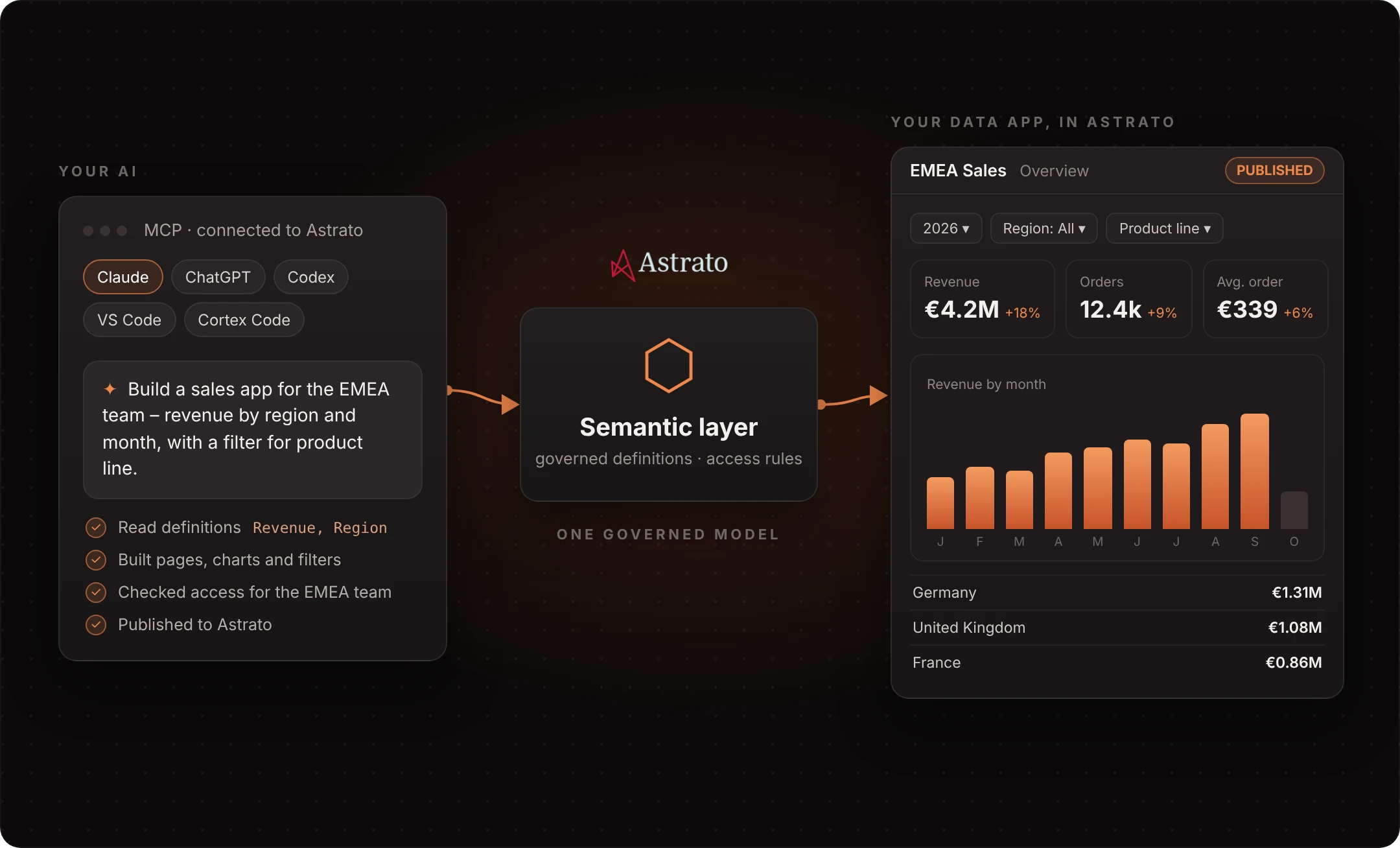

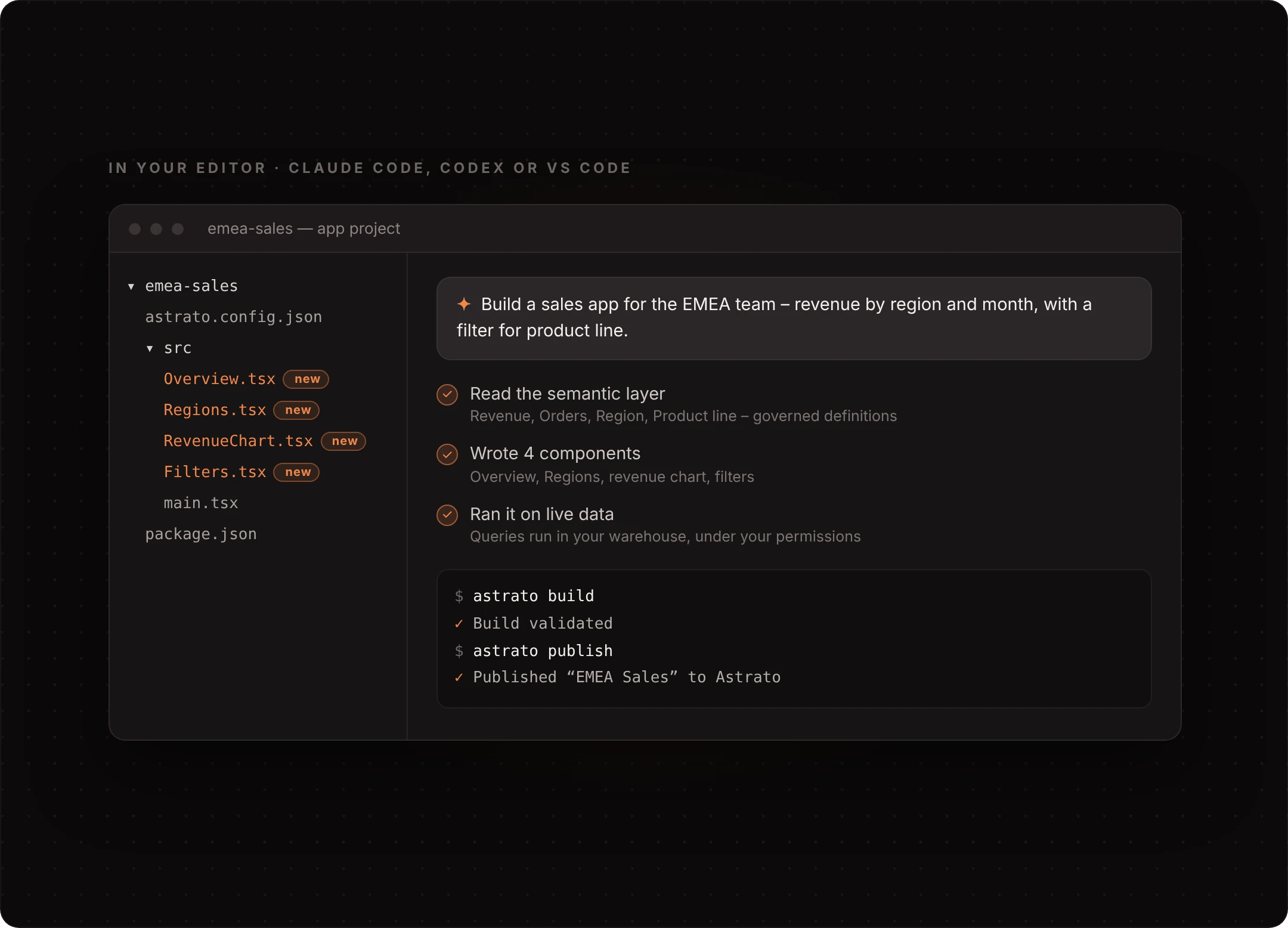
Go from a sentence to a working app – without leaving your editor.
Working in Claude Code, Codex or VS Code? Describe the app you need and your assistant builds it on Astrato: pages, charts, filters and writeback, on your live data and governed definitions. Review it, then publish it to your team.
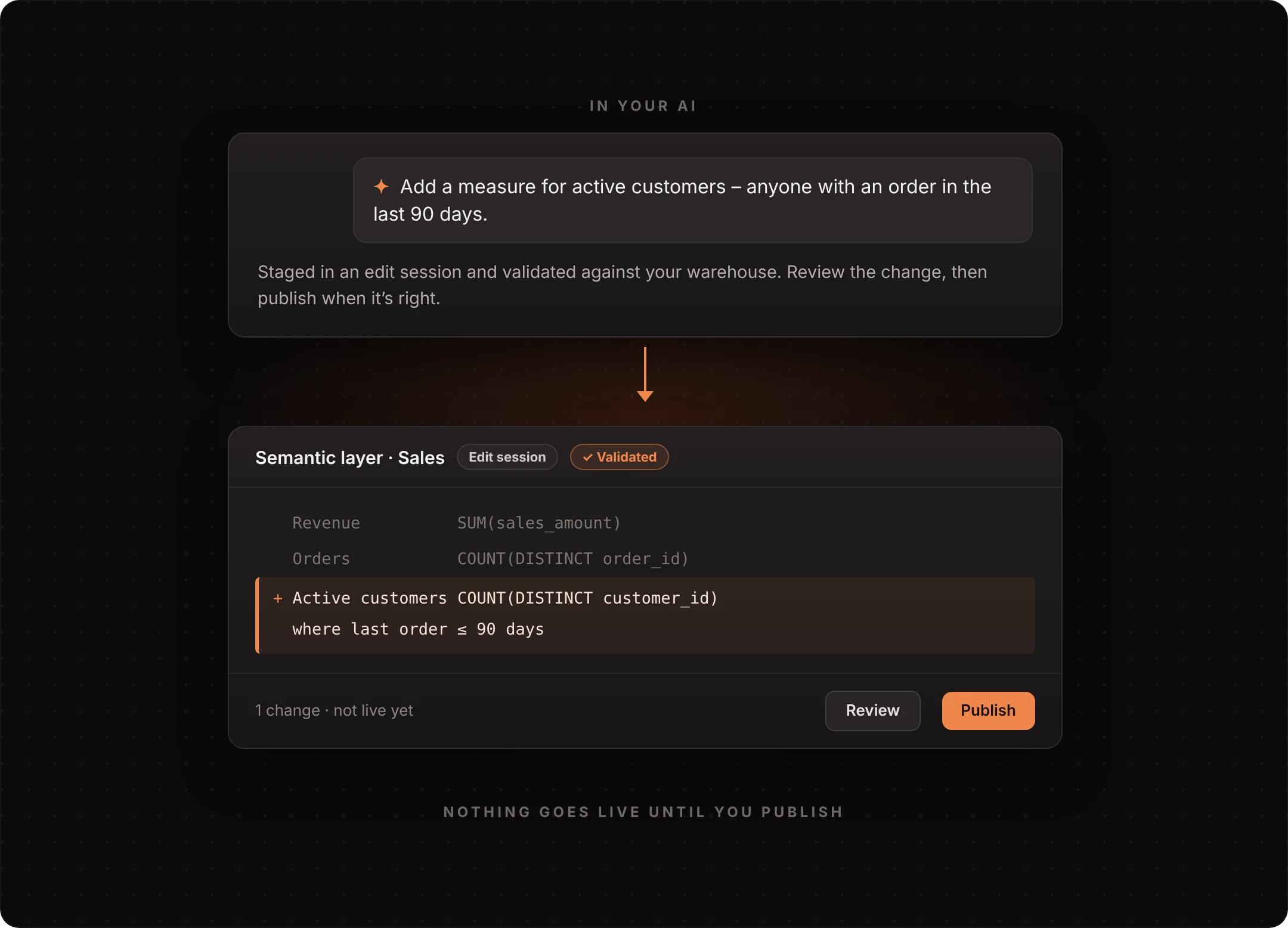
Change a definition from chat. Nothing goes live until you publish.
Add a measure, fix a join or rename a dimension by describing it. Your assistant stages the change in an edit session, Astrato validates it against your warehouse, and you review the diff before anyone sees it. Publish when it's right. Every version is kept, so any change can be undone.
Ask in plain language. Get the number finance signs off on.
Ask your assistant a question and it answers from Astrato's semantic layer, not from a guess at your schema. Governed business questions run by name and revision, so "net revenue last quarter" returns the same figure in Claude, in ChatGPT and in every Astrato app. Queries run live in your warehouse.
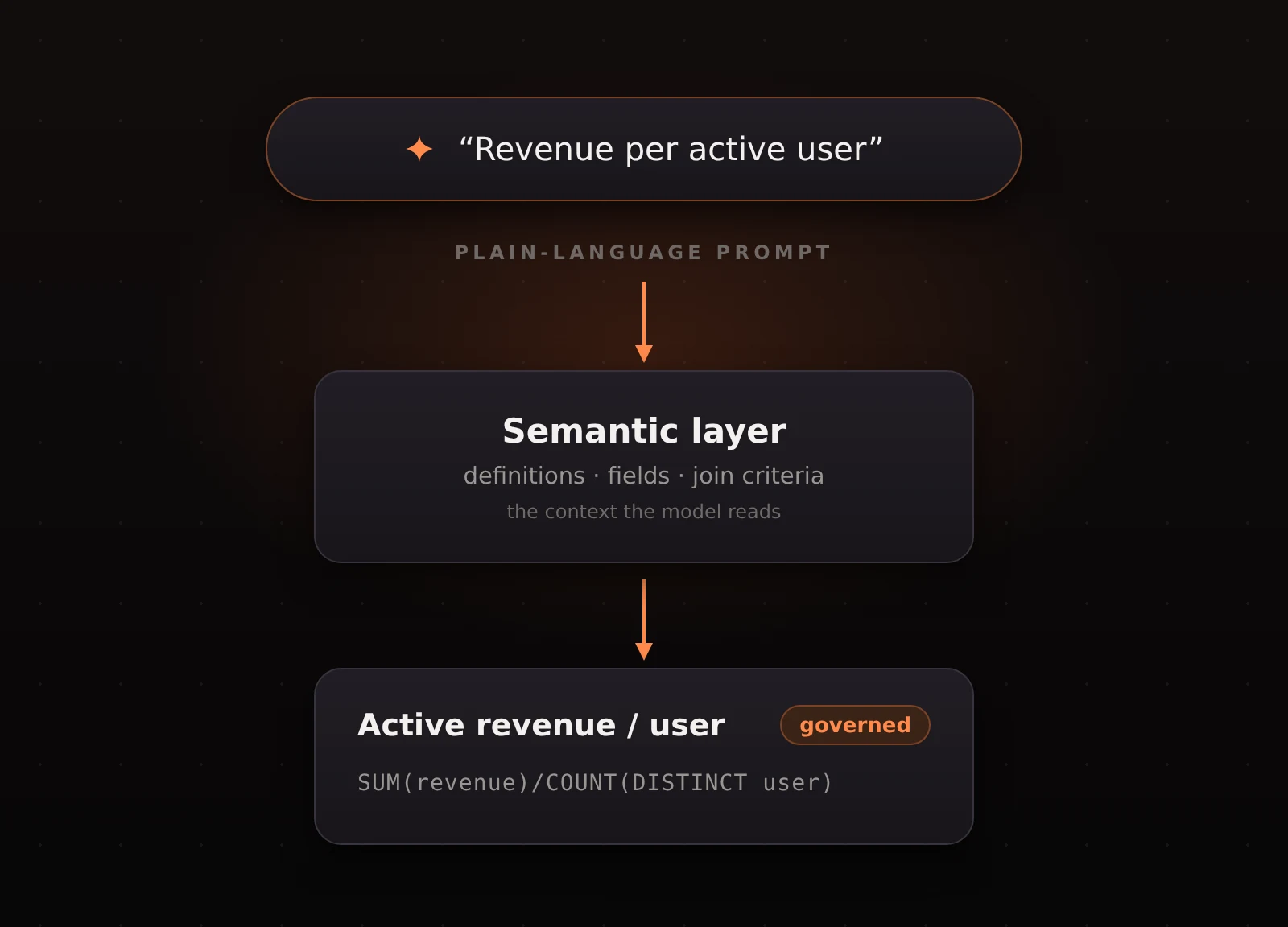
Your AI sees exactly what you see. Nothing more.
The assistant connects as you. Every call runs under your Astrato permissions, and every query runs in your warehouse under the access you already have, so it can't open a dataset you can't open or change something you can't change. Admins decide who can connect and what they can do.
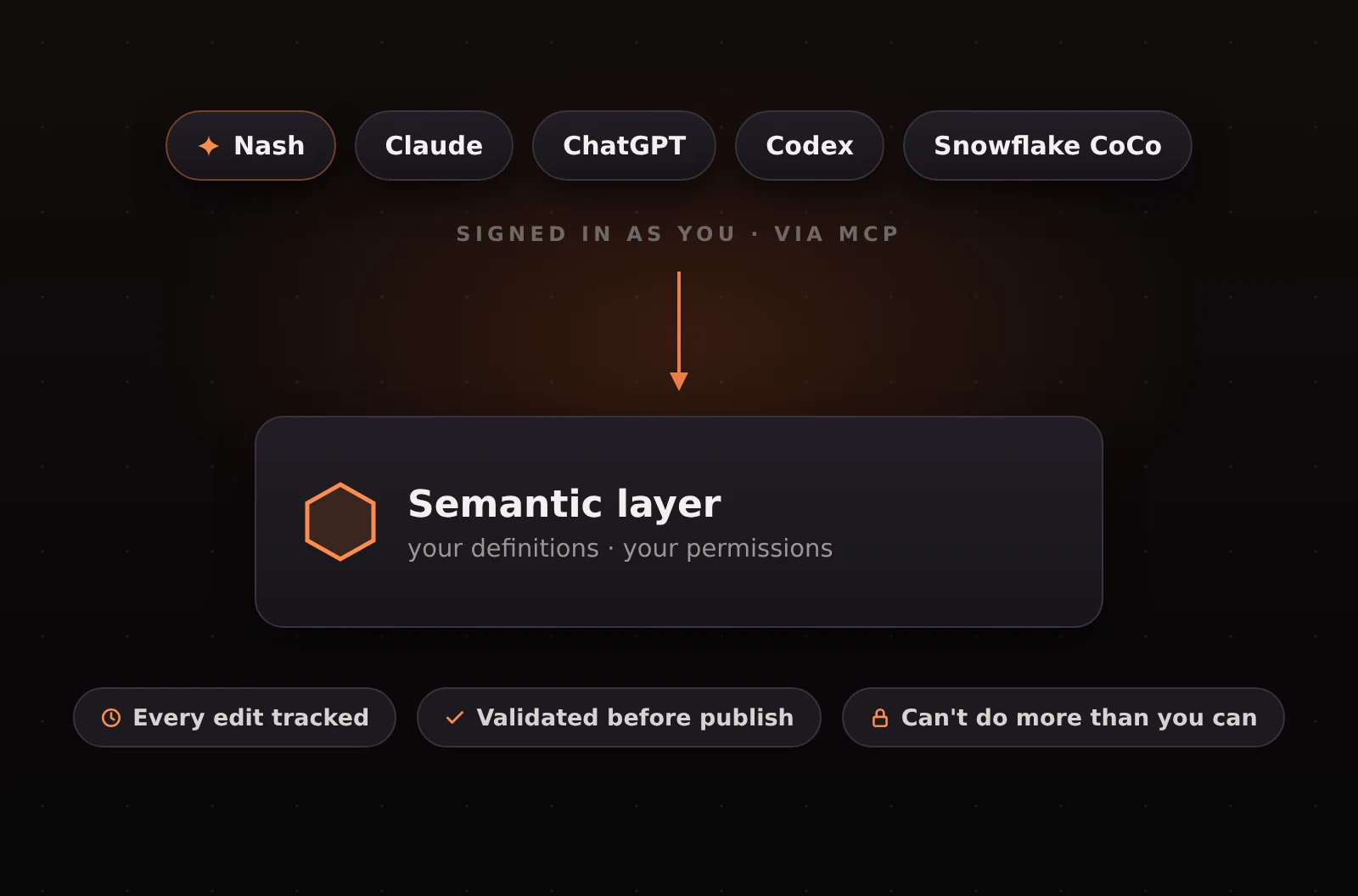
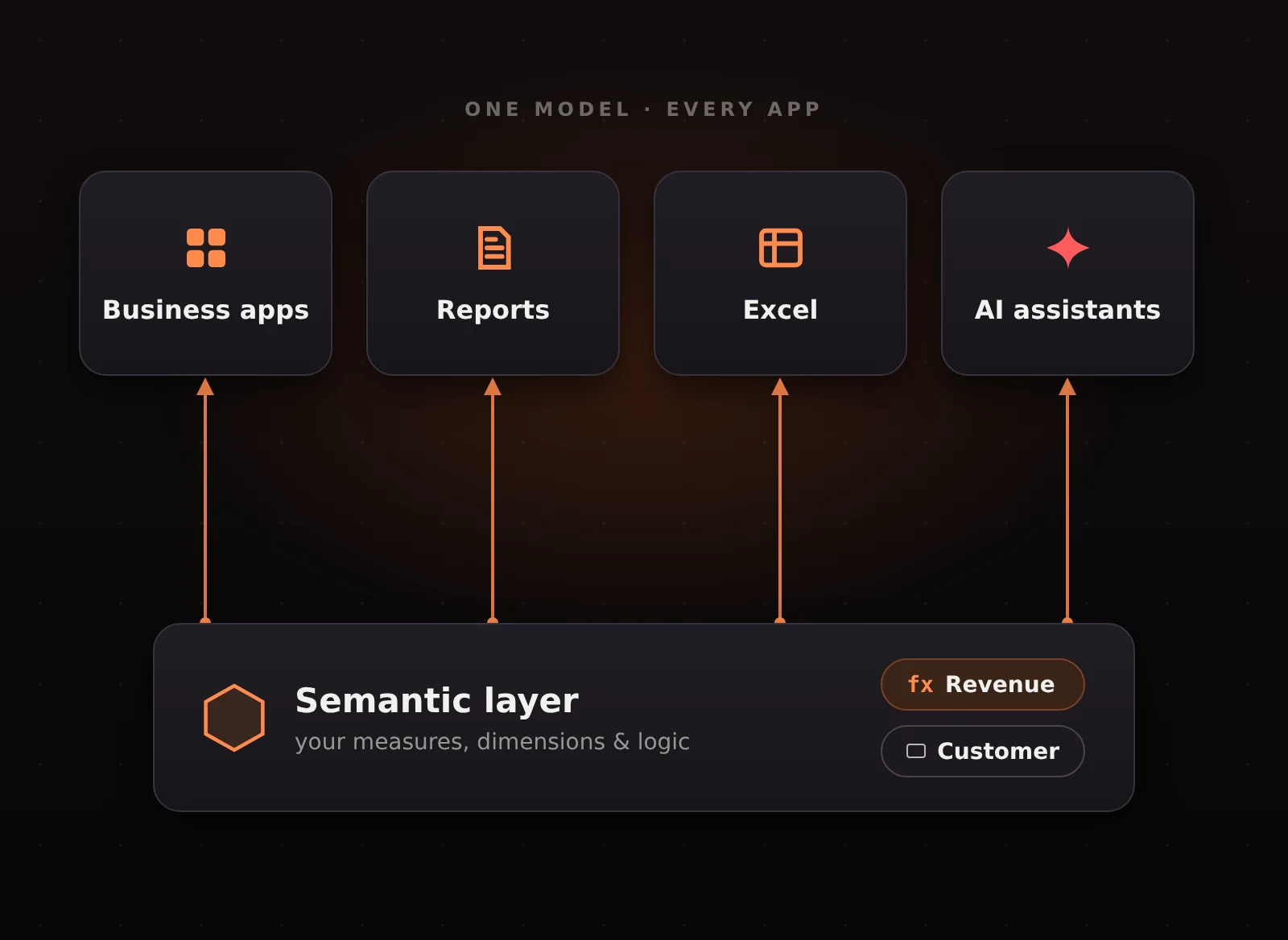
Nash or your own assistant. Same definitions either way.
Nash, the assistant inside Astrato AI, builds apps right in Astrato. Your own assistant reaches the same semantic layer through MCP. Use whichever fits the moment – an app built in Codex, a quick question in Claude, a refinement with Nash – and the numbers agree, because they come from one place.
Connect in three steps.
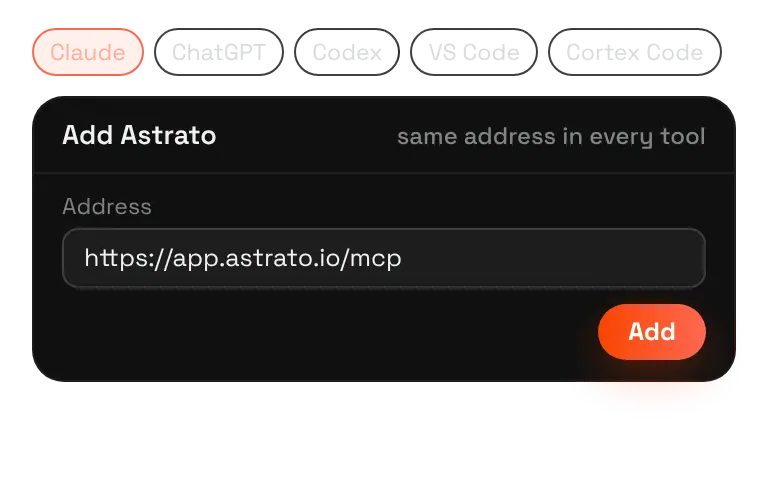
1. Add Astrato
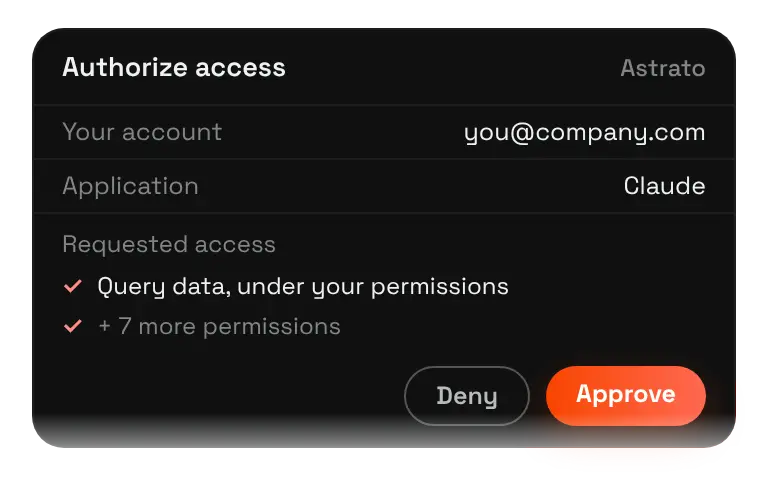
2. Sign in
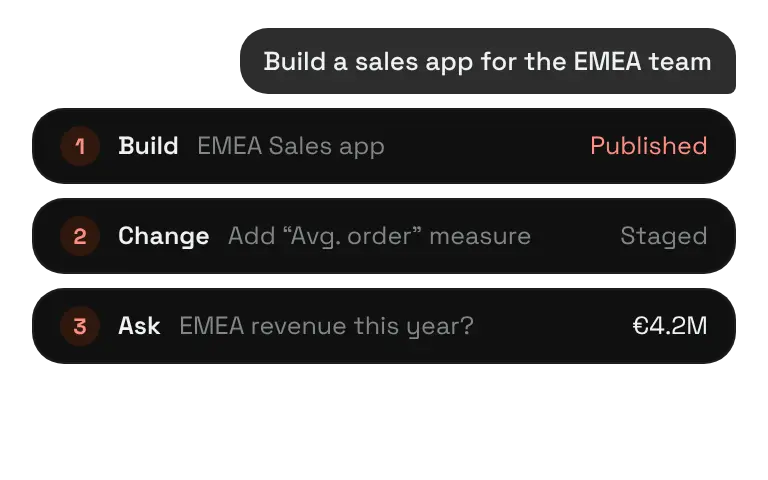
3. Build, change, ask
Bring a decision. Leave with an app.

Frequently asked questions
What is MCP, and why does Astrato use it?
The Model Context Protocol is an open standard that lets an AI assistant use outside tools and data. Astrato runs an MCP server, so any assistant that supports MCP can reach your semantic layer, run governed questions and work with your apps – without a custom integration for each one.

Can I build apps from my own AI assistant?
Yes. From Claude Code, Codex or VS Code you can describe an app and have it built and published on Astrato, on your live data and governed definitions. The setup guide shows how to connect.
Which AI assistants work with Astrato?
Claude, ChatGPT, Codex, VS Code and Cortex Code, plus any other client that supports MCP. Astrato is also listed on the Claude Marketplace. The setup guide covers each one.
Is this the same as Nash?
No. Nash is the assistant built into Astrato AI. The MCP server is how other assistants reach Astrato. Both work from the same semantic layer and the same permissions, so they give the same answers.
Can my AI change our definitions without anyone noticing?
No. Changes are staged in an edit session and validated before anything is published. Nothing reaches your apps until someone with permission publishes it, and every version is kept, so any change can be rolled back.
What data does the AI provider see?
Only what the assistant asks for and you're allowed to see: query results, definitions and app details, returned to the assistant you connected. Astrato doesn't copy your warehouse to the provider, and queries run in your warehouse. Choose the assistant that fits your data policy.