
No-code data apps for operational analytics
Legacy BI tools are read-only. But businesses run on decisions – approvals, adjustments, corrections, comments. So teams fall back to spreadsheets, emails, and manual loops.
Astrato closes the loop: build data apps on top of your warehouse with forms, writeback, workflow triggers, and AI, so insights actually turn into actions.


What can you build?
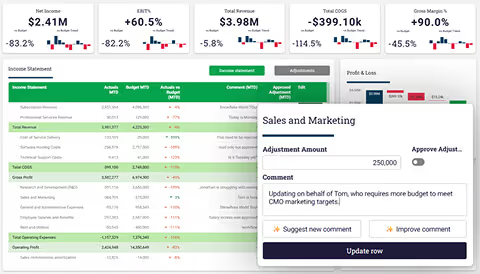
Planning & budgeting
Adjust forecasts, submit budgets, and lock periods, directly in your dashboard. Changes write back to your warehouse with full audit trails. No more round-tripping emails with spreadsheets.
Forms & data input
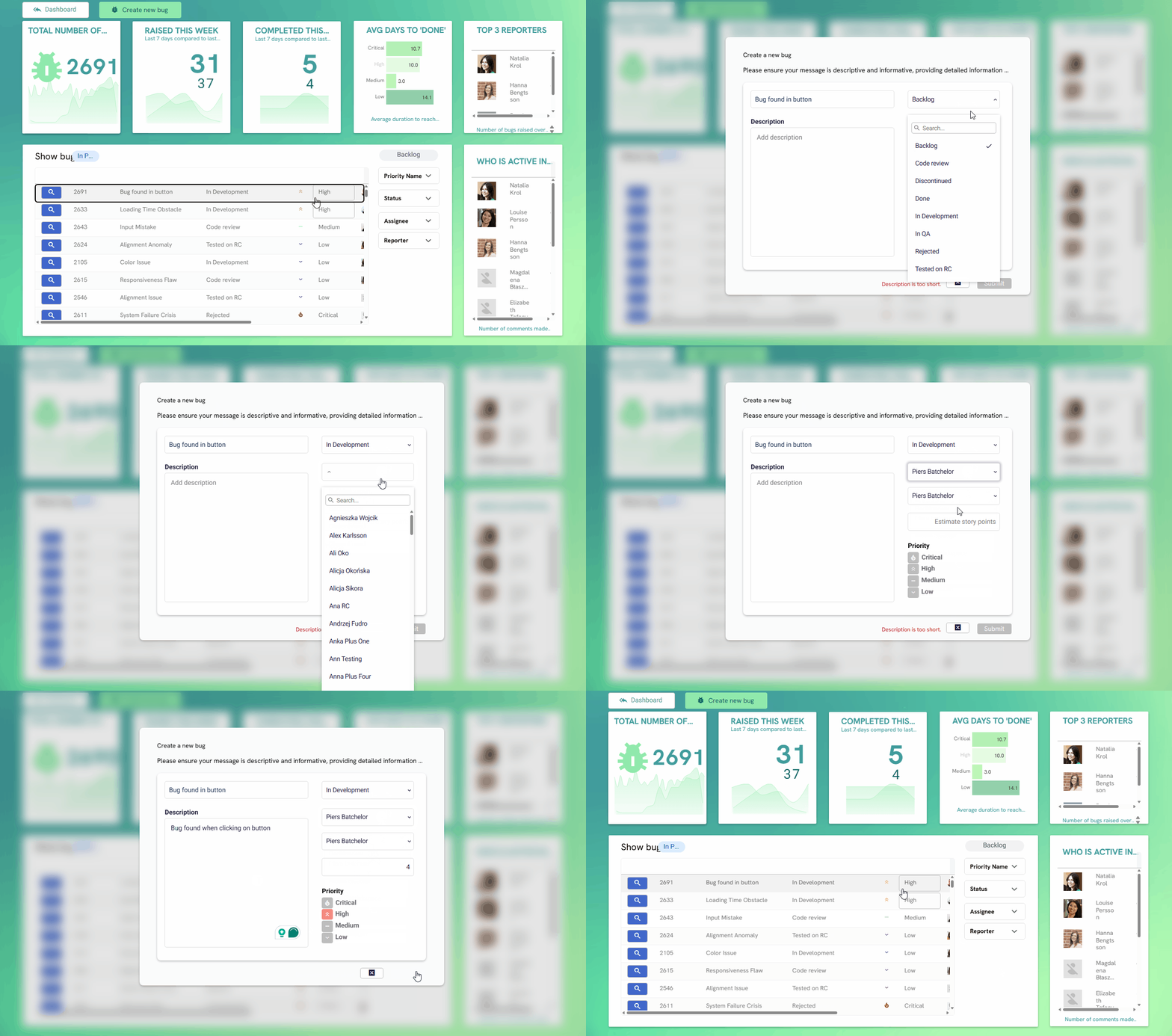
Build no-code forms that validate, store, and sync data to your warehouse. Let your subject matter experts collect data themselves, without filing a ticket with engineering.

Predictive modelling
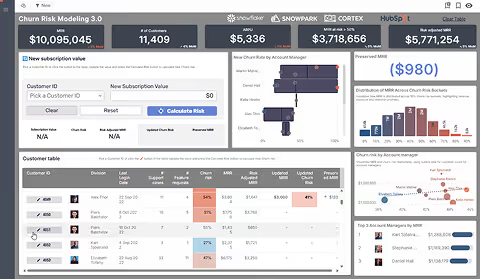
Run forecasting and what-if scenarios on live data. Adjust inputs, see outcomes instantly, and persist the scenarios you want to keep. Model churn risk, price sensitivity, or resource allocation without constantly pinging your data science team.


Astrato lets me build advanced data products / data apps quickly and at a very low cost. It means I can sell analytics to markets that don’t traditionally have the budget or resources to invest in dedicated analytics products.

How it works
Build with no code
Drag-and-drop action blocks – forms, validations, filters, conditional logic, triggers. Show and hide elements, navigate between views, and guide users through multi-step flows. Design operational workflows without writing a line of code.
Write back in real time
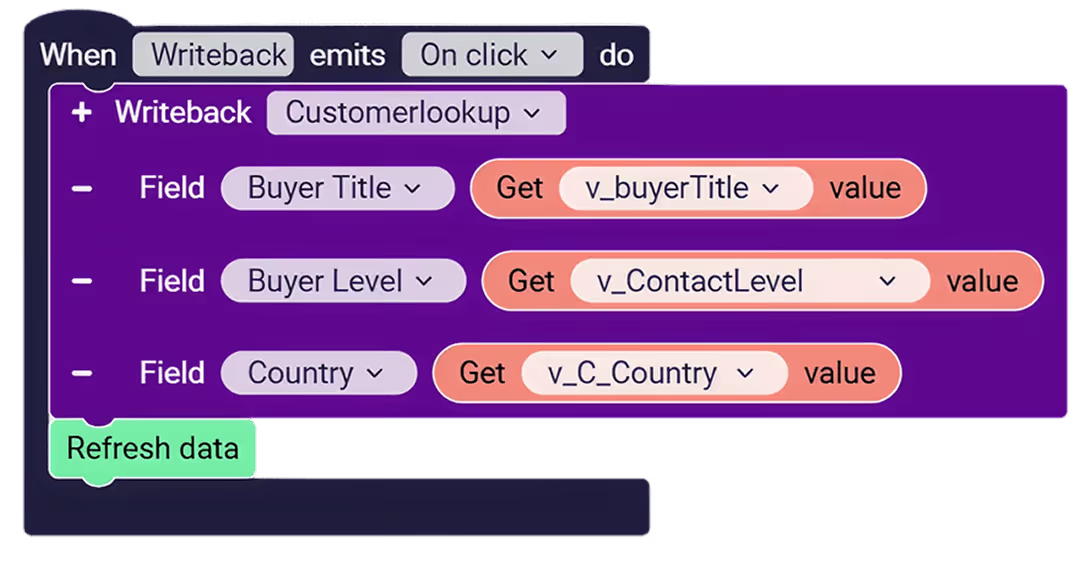
Users update records, submit inputs, and approve changes directly in the dashboard. Every change syncs to your warehouse instantly, with role-based permissions and a full audit trail.
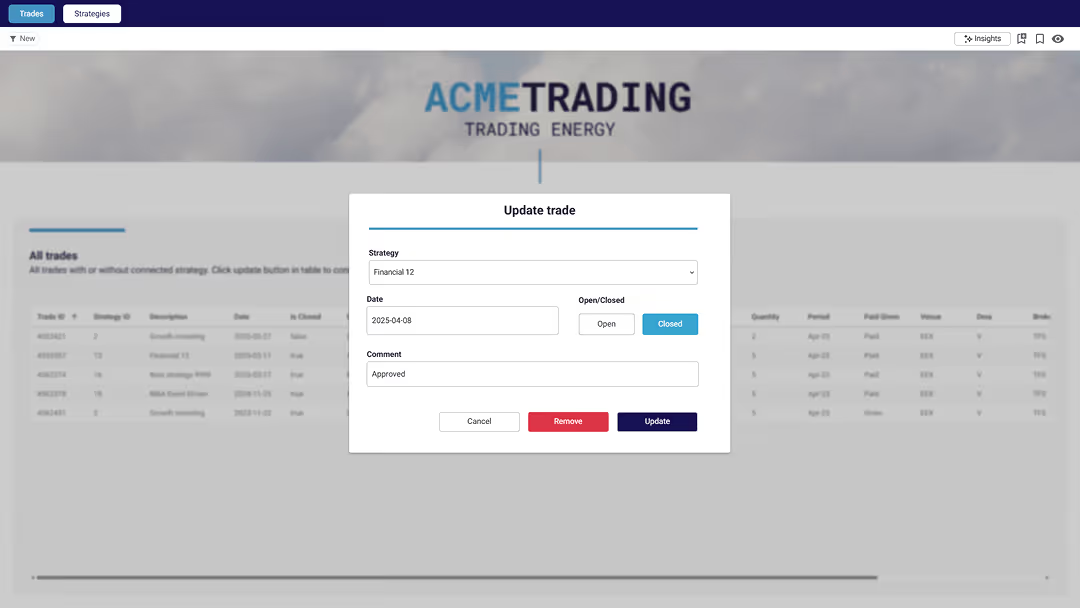
Trigger your wider stack
A button in your data app can call stored procedures or external functions in your warehouse – to update Salesforce, post to Slack, send an email, or kick off any downstream workflow. Everything runs through your governed data platform.
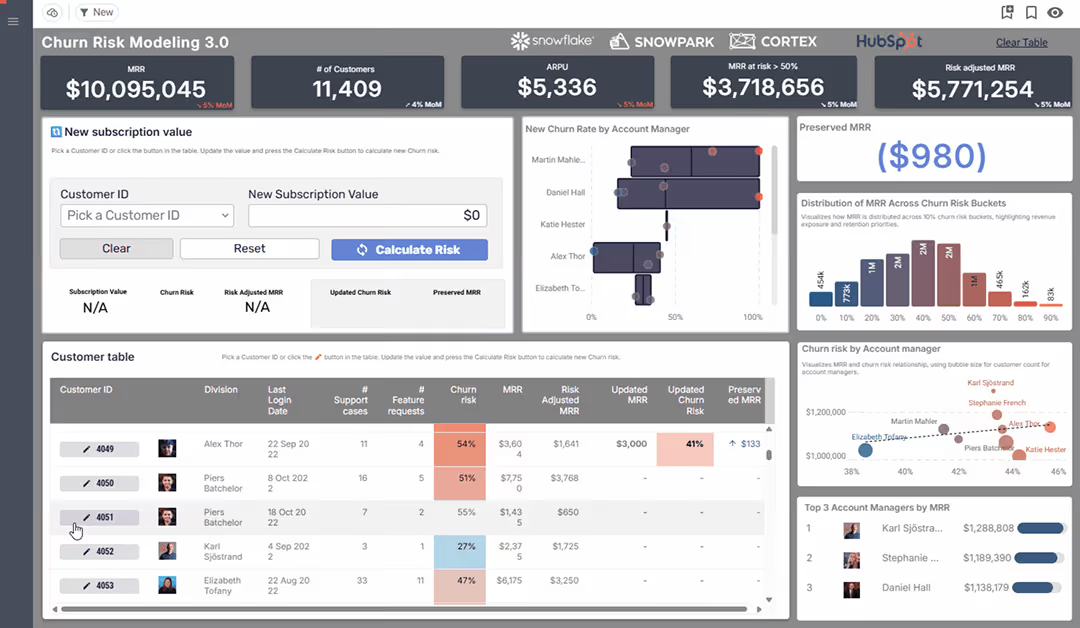

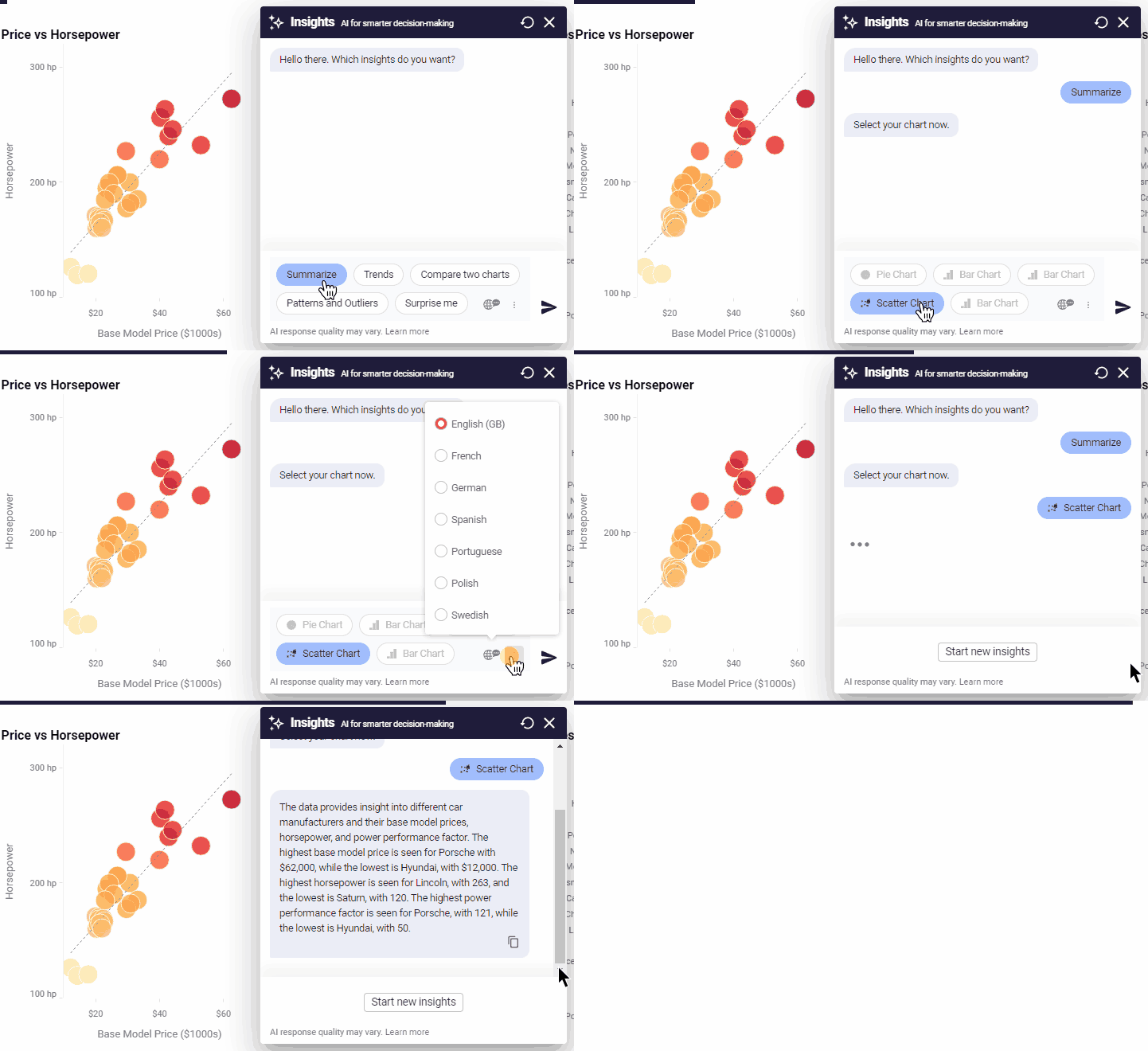
Layer AI into any data app
Generate summaries your team can act on or trigger smart alerts and notifications. Surface anomalies before anyone has to go looking. Astrato's semantic layer gives AI the business context behind the data, so it knows what "revenue" means, not just which column it lives in. Bring your LLM – OpenAI, Gemini, Snowflake Cortex, or your own – and your data never leaves the warehouse.

Governed by your warehouse as a single source of truth
Every action, every writeback, every AI query runs through your existing data platform, with the permissions, RLS, and audit trails you've already configured. No data copies. No sync pipelines. No governance gaps.




Build your data app today

Frequently asked questions
What happens if two users write back to the same record at the same time?
The last write wins at the database level, the same as any SQL operation. For use cases where that matters — collaborative forecasting, shared budgets — you can layer approval workflows or row-level locks so concurrent edits are serialized. The warehouse stays the arbiter of truth, not the BI tool.

Can end users actually update data from inside a dashboard, and is that safe?
Yes. Astrato supports writeback through governed SQL inserts and updates, with audit trails and optional approval workflows. Role-based permissions control who can edit what, and every change is logged at the warehouse level, so your data team keeps full visibility.
Can data apps trigger actions in other systems like Salesforce or Slack?
Yes. Action Blocks let you trigger downstream workflows from inside a dashboard — send a message, update a record, kick off an approval, or call an API. It's how you turn a passive report into an operational tool without building a custom app.
Do we need developers to build data apps in Astrato?
No. Data apps are built with the same no-code editor as dashboards. Drag-and-drop layout, visual logic for actions and approvals, and a semantic layer that handles the data model. Developers are only needed if you want to extend things via the API.
If a user enters a bad forecast number, how do we roll it back?
Every writeback is logged with user, timestamp, and payload, so you have a full audit trail. You can either revert the specific record from history, restore from a warehouse snapshot, or require approval workflows on sensitive fields in the first place so bad data never commits.
Why not Sigma Computing embeds?
Modern BI tools improve usability, but still treat embedding as an extension of dashboards.
That means:
- limited control over presentation
- spreadsheet-style UX that doesn’t match most products
- less flexibility in building tailored customer experiences
Astrato lets you design analytics that feel native to your product — not an embedded worksheet.