Why Your Semantic Layer Is the Prerequisite for Trustworthy AI
AI on your data is only as trustworthy as its definitions. Why the semantic layer is the foundation to get right before AI, not after.


AI on your data is only as trustworthy as the definitions it queries. Point an AI agent at raw warehouse tables and it guesses what “revenue” means; point it at a governed semantic layer and it inherits the definition your team already trusts. This guide explains why the semantic layer is the foundation to get right before AI — not after.
TL;DR
- AI doesn’t fix an ungoverned data environment — it amplifies it. On raw data, an AI produces confident, plausible, wrong answers, faster.
- The semantic layer is the fix: it gives AI the governed definitions, relationships, and permissions a human analyst would use, so answers are grounded rather than guessed.
- Sequence matters: get the semantic layer right first, then add AI. The other order automates your inconsistencies.
- This is why the whole cluster comes first: building, defining, auditing, and governing your semantic layer is the groundwork that makes trustworthy AI possible.
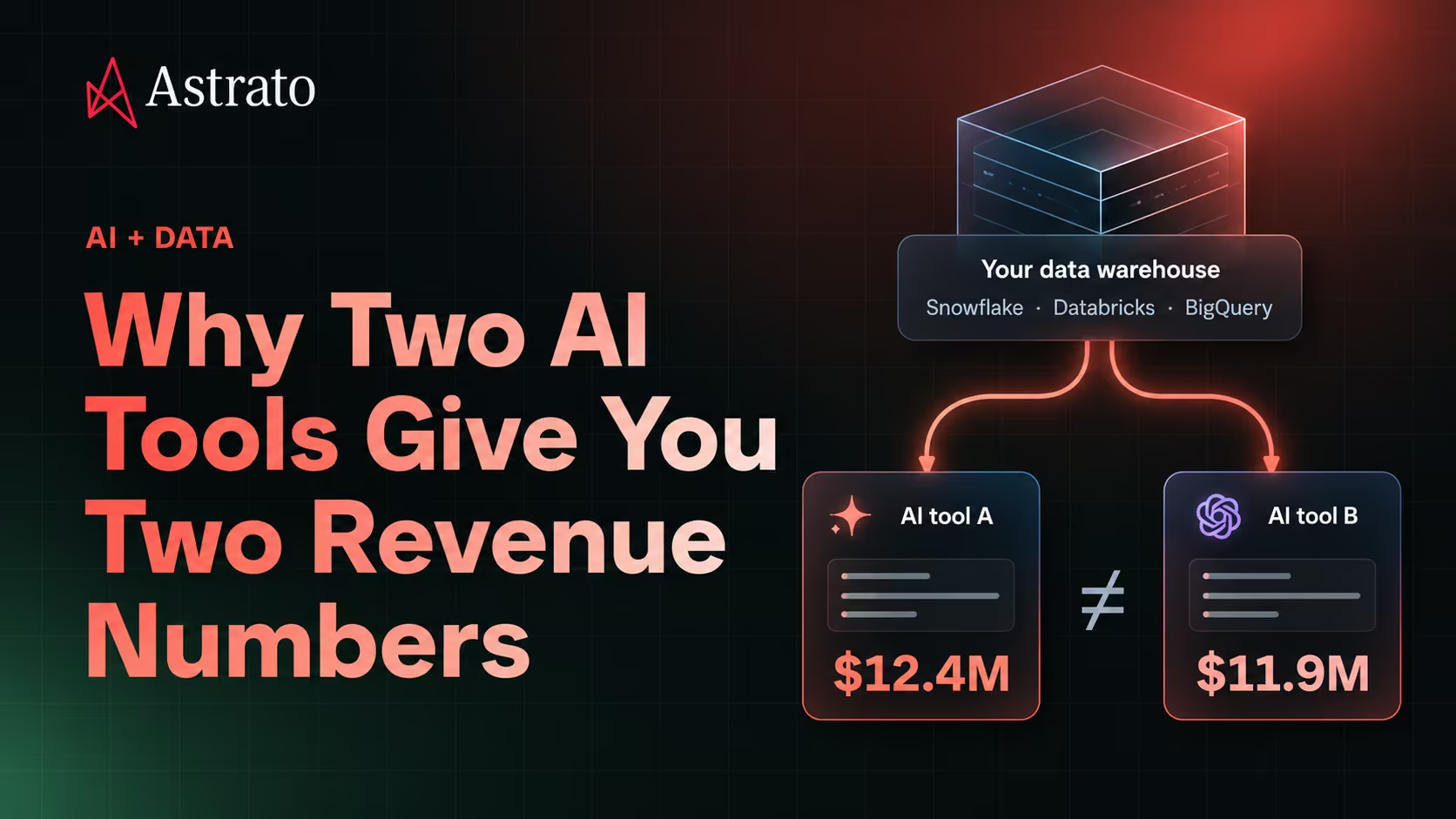
Every vendor now promises AI that answers questions about your business in plain language. The demos are impressive. The failure mode is quiet: ask an ungoverned AI for “revenue last quarter” and it has to guess which table, which filter, which definition — and it will guess confidently, sometimes wrong. A plausible wrong number is more dangerous than no number, because someone acts on it. The thing standing between “AI on our data” and “trustworthy AI on our data” is the semantic layer.
AI amplifies whatever it stands on
Here’s the principle that should govern every AI-on-data decision: AI doesn’t improve a messy data foundation, it accelerates it. Point a capable model at a clean, governed model and it drafts analysis, answers in plain language, and genuinely speeds up a team. Point that same model at spreadsheet sprawl and fifteen versions of “revenue” — with the real definitions living in people’s heads — and it produces well-written, confident, wrong answers. Same model. Opposite outcomes. The variable isn’t the AI’s intelligence; it’s the foundation underneath it.
This is why “add AI to our analytics” so often disappoints. The bottleneck for trustworthy enterprise AI was never the model — models are abundant and improving weekly. The bottleneck is the missing shared meaning between the raw data and the question. Without it, speed just gets you to the wrong answer sooner.
Why AI on raw data goes wrong
Enterprise questions usually have exactly one correct answer, and getting it right depends on definitions the AI can’t infer. What counts as revenue — bookings or recognized? Which customers are “active”? Which of four “margin” calculations is the approved one? When an AI translates a question into SQL over raw tables with no agreed business context, it fills those gaps with guesses. The output reads like an answer and hides its assumptions inside a fluent sentence, which is exactly what makes it dangerous: you can’t see the wrong filter it silently applied.
How the semantic layer makes AI trustworthy
The semantic layer removes the guessing. Because it holds your metric definitions, table relationships, and governance in one place, an AI querying through it inherits the same context a human analyst would. Ask for “revenue” and it uses the one governed definition, not an invented one. Three things change the moment AI runs on the layer instead of around it:
- Grounded definitions: the AI computes “active customer” the way your business defined it, not the way it guessed.
- Inherited governance: row-level security applies, so the AI can only ever surface data the user was already allowed to see.
- Consistency with everything else: the AI’s answer matches the dashboard and the data app, because they all read the same model.
The semantic layer is, in effect, the trusted context an AI agent needs to reason about your business without hallucinating the math.
Foundation first: the right sequence
This leads to a simple, unfashionable conclusion: build the semantic layer first, then add AI. It’s tempting to do the reverse — AI is the exciting part — but layering AI on an ungoverned foundation just automates your inconsistencies at scale. The order matters more than the model.
Getting the foundation right is exactly what the rest of this cluster is about. You build the semantic layer on your warehouse; you define your core metrics once so “revenue” and “churn” mean one thing; you audit it to catch duplicates and drift before they mislead; and you keep it warehouse-agnostic so the governed context isn’t locked to one platform. Do that, and you don’t just get trustworthy dashboards and data apps — you get the foundation that makes trustworthy AI possible.
Where Astrato and Nash fit
Astrato is a warehouse-native BI platform with the semantic layer at its core, so AI runs on governed definitions by design rather than as an afterthought. Its built-in assistant, Nash, is deliberately grounded this way: every chart it builds and every measure it drafts is anchored in your live semantic model, so it stays accurate and in sync.
Nash today is a modelling and dashboard-building copilot — it accelerates the people who build analytics rather than acting as an autonomous analyst — and because it reads the governed model, the work it produces inherits your definitions and your security. As AI in BI advances, the model underneath is what will keep it trustworthy. Getting that model right is the point of this whole cluster — and the prerequisite for everything that comes next. See the Astrato semantic layer or book a demo.
Key takeaways
- AI amplifies its foundation — on ungoverned data it produces confident, plausible, wrong answers faster.
- Enterprise questions have one correct answer that depends on definitions an AI can’t infer from raw tables.
- A semantic layer gives AI grounded definitions, inherited governance, and consistency with every other consumer.
- Sequence matters: build and govern the semantic layer first, then add AI — the reverse automates your inconsistencies.
- The rest of this cluster — building, defining, auditing, keeping it warehouse-agnostic — is the groundwork trustworthy AI depends on.
Frequently asked questions
Why does AI need a semantic layer?
Because AI querying raw data has to guess what business terms mean and will guess confidently, sometimes wrong. A semantic layer gives it the governed definitions, relationships, and permissions a human analyst would use, so answers are grounded rather than invented.
Can’t a powerful enough model just figure out my data?
No — the issue isn’t intelligence, it’s missing context. Enterprise metrics depend on business decisions (which revenue counts, what “active” means) that aren’t in the raw tables. Without a semantic layer, even the best model fills those gaps with guesses.
Should I build the semantic layer before adding AI?
Yes. AI on an ungoverned foundation automates your inconsistencies. Get the semantic layer right first — defined, audited, governed — then AI runs on trustworthy definitions.
Does a semantic layer guarantee the AI is always right?
It removes the largest source of error — guessed definitions — and keeps AI consistent with your governed metrics and security. Human review still matters, but grounded AI is trustworthy in a way ungoverned AI cannot be.
Ready to experience next-gen analytics?
See how Astrato runs natively in your warehouse.