Why Two AI Tools Give You Two Revenue Numbers
Why can two AI tools query the same warehouse and return different revenue numbers? See how business definitions turn raw data into answers you can trust.

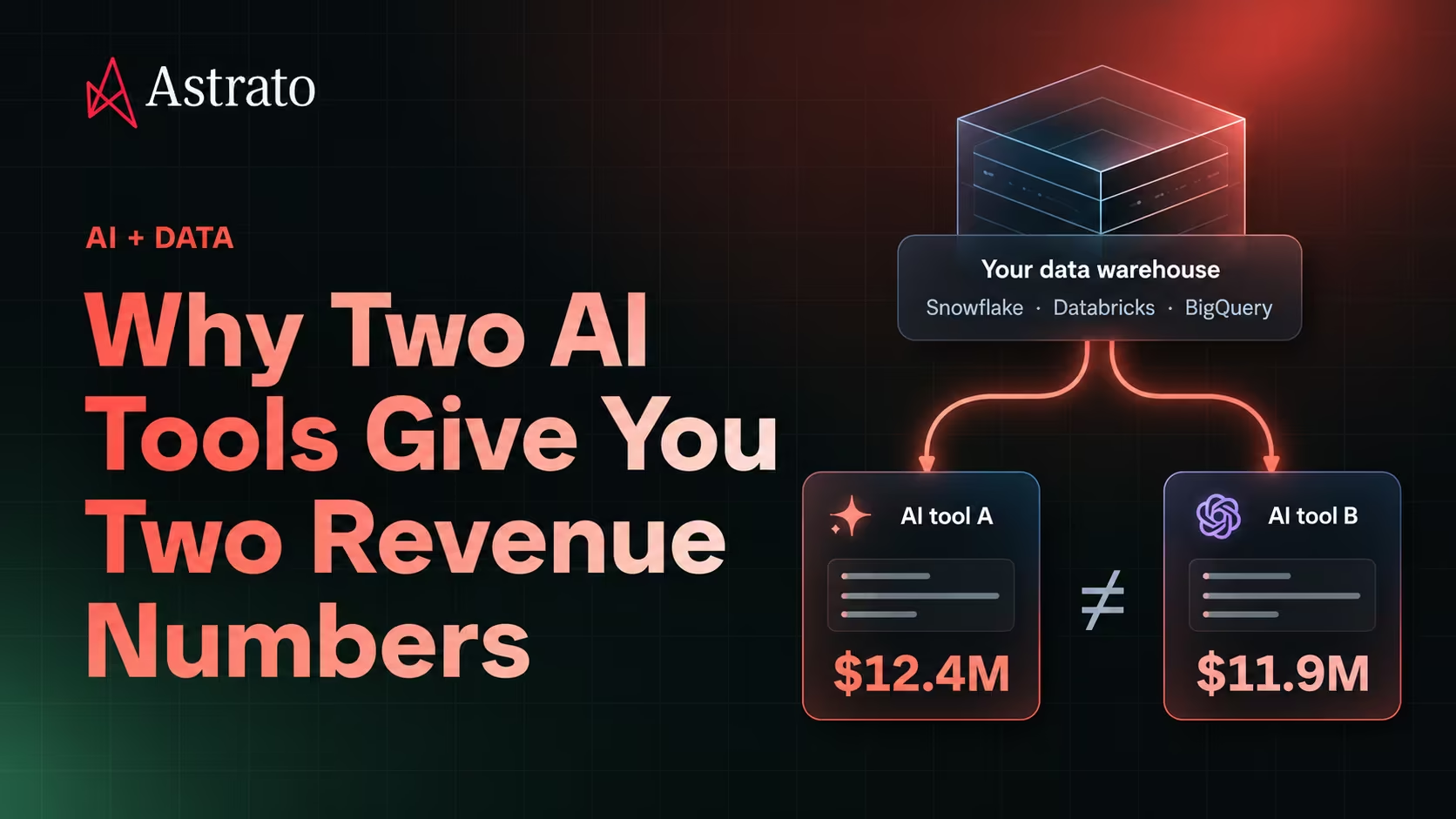
You ask one AI tool how much revenue your company made last quarter. It says $12.4 million.
You ask another. $11.9 million.
Then you open the finance report everyone has been using for the past six months. $12.1 million.
All three answers came from the same warehouse.
Which one is revenue?
This is an increasingly common problem as companies give AI direct access to business data. Connecting an AI assistant to Snowflake, Databricks or BigQuery solves the access problem. It gives AI somewhere to look.
It doesn't necessarily tell AI what your business means by revenue.
And that distinction becomes much more important when AI moves beyond answering questions and starts building the apps people use to make decisions.
The SQL can be right and the answer can still be wrong
Suppose your warehouse contains an orders table with everything an AI needs to calculate revenue.
The obvious query looks simple enough: filter the right dates and sum the revenue.
But which dates?
One AI might use the date an order was placed. Another might use the payment date. Finance might recognize revenue based on a different rule entirely.
Then there are refunds. Cancelled orders. Discounts. Taxes. Internal transactions. Multiple currencies. Test accounts. Partially fulfilled orders.
Even something that sounds as straightforward as “revenue last quarter” can require a series of business decisions before anyone writes a query.
Imagine two AI tools independently interpreting the request.
The first includes completed and partially refunded orders, uses the order date and converts foreign currencies using the rate recorded with each transaction.
The second excludes any refunded order, uses the payment date and applies a reporting-period exchange rate.
Both can produce valid SQL.
Both can successfully query the same warehouse.
Both can accurately calculate the result of the logic they chose.
And they can still give you two different revenue numbers.
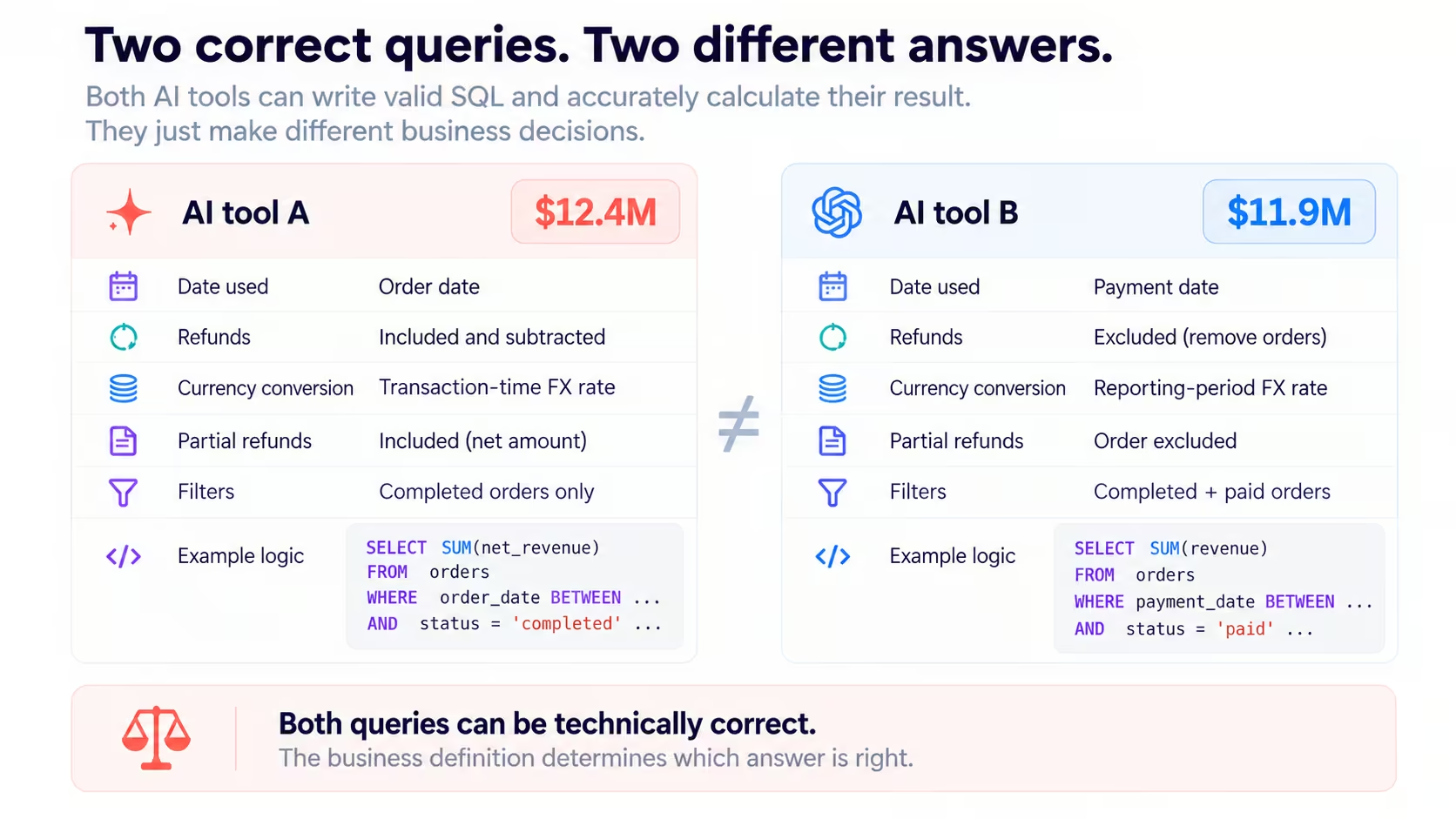
The problem isn't necessarily that either AI hallucinated. It may be that neither was given enough business context to know which calculation your company considers correct.
Your warehouse has the data. Your company has the meaning.
A data warehouse can contain an extraordinary amount of information about a business.
What it doesn't automatically contain is a universal explanation of how every person in that business should interpret it.
A column called revenue helps. So does a well-designed data model. But real business questions often depend on definitions and relationships that go beyond individual fields.
Consider a few seemingly simple questions:
- What counts as an active customer?
- When does a trial become a conversion?
- Which refunds reduce revenue?
- Is ARR based on current contract value or normalized recurring value?
- Which date determines whether a sale belongs in this quarter?
- Should internal accounts be excluded?
- Can every employee see revenue by customer?
People inside the company have usually answered these questions already.
The problem is whether the AI has access to those answers when it needs them.
Without that context, every new AI experience has an opportunity to reconstruct the logic for itself.
That gives us a useful way to think about the problem:
Same warehouse data does not automatically mean the same business answer.
The data is only one part of what the AI needs.
Giving more AI tools access can multiply the problem
For years, companies have dealt with disagreements between spreadsheets, dashboards and reports.
AI doesn't create that problem. But it can dramatically increase the number of places where it appears.
Previously, creating another analytics experience usually required someone to deliberately build it. An analyst defined a metric. A developer wrote a query. A BI team built a dashboard. Someone had an opportunity to notice that “revenue” meant something different in two places.
Now the barrier is much lower.
A sales leader can ask an AI assistant to analyze pipeline performance. Finance can use another assistant to investigate revenue. A product team can build an internal customer-health app. An executive can ask a general-purpose AI tool a question directly.
Soon, the question isn't whether AI can produce another query, chart or app.
It's whether the tenth experience interprets the business the same way as the first nine.
Making AI faster at building things doesn't solve that problem. In fact, speed makes consistent definitions more important because new experiences can appear much faster than a central data team can manually check each one.
Fast is easy. Right is the hard part.
What does AI need besides access to the warehouse?
Giving AI database credentials tells it where the data lives.
For reliable business answers, it also needs context about how that data should be used.
That can include business definitions: what revenue, churn, active customer, gross margin and other company metrics actually mean.
It needs relationships: which tables should be joined and how those relationships affect the calculation.
It needs calculation logic: the measures, filters and rules the business has already agreed on.
It needs access rules: who can see what, particularly when an AI experience can answer questions across customer, employee or financial data.
And it needs the ability to apply that context to live warehouse data, rather than creating another detached copy whose numbers can drift from the source.
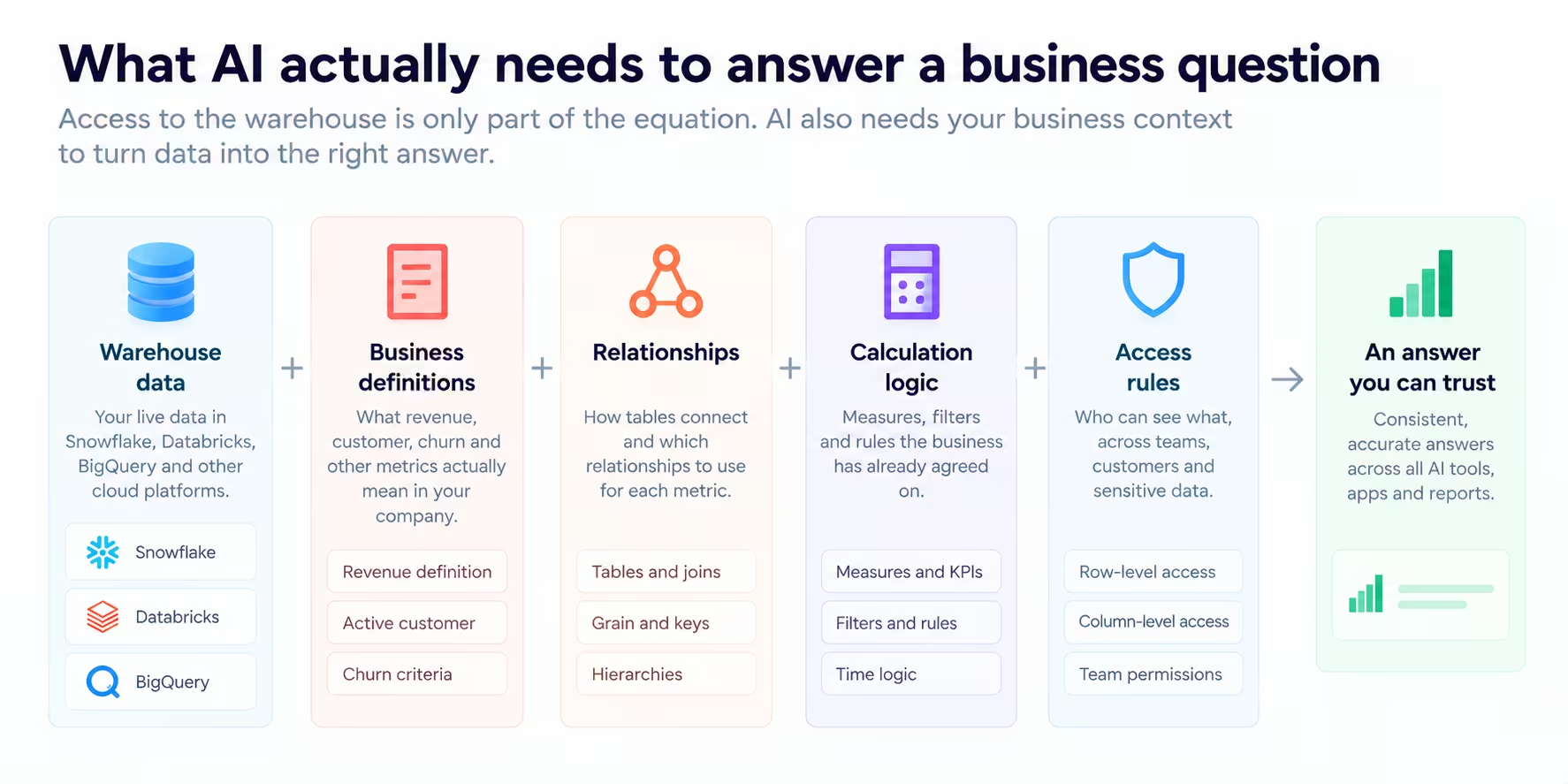
Put those pieces together and the problem changes.
Instead of asking each AI tool to figure out what “revenue” means, you can give different experiences access to the business context that already defines it.
You shouldn't need one AI tool to get one version of the truth
There's an obvious response to AI tools disagreeing: standardize on one.
One approved assistant. One interface. One place where employees ask questions.
It sounds tidy. It probably won't reflect how people actually work.
A finance team may prefer Excel. An analyst might work through an analytics application. Another employee might ask ChatGPT or Claude. A customer-facing workflow might need a purpose-built application rather than a chat window.
And the next useful AI interface may not exist yet.
Trying to make the interface itself the source of truth therefore creates another dependency. The organization gets consistent answers only as long as everyone uses the same tool in the same way.
A more durable approach is to separate the experience from the business context underneath it.
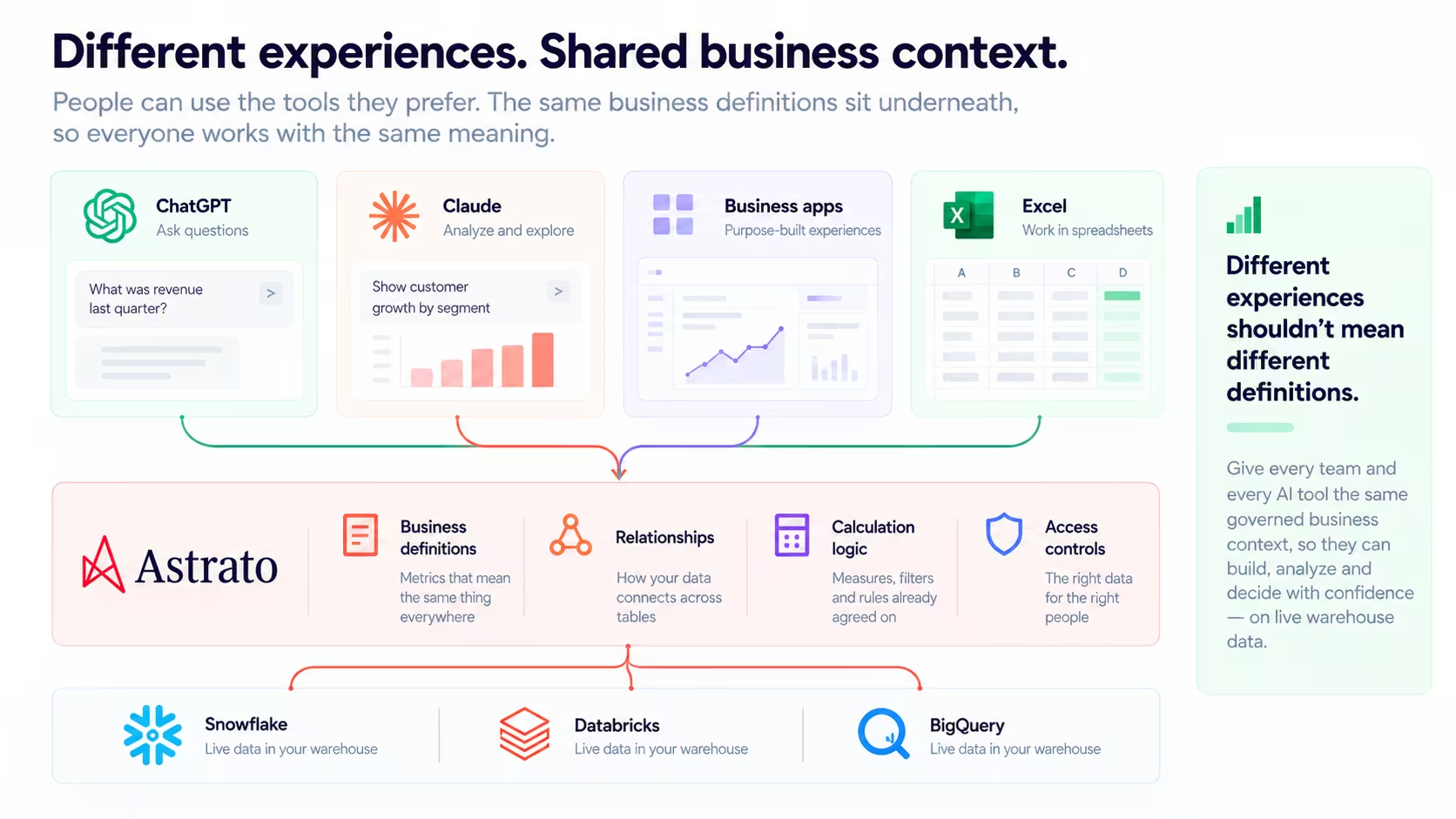
The experiences can change.
The definition of revenue shouldn't change with them.
That means the same governed definition can support a finance workflow, an operational app or an AI assistant without each one independently deciding what the business means.
This matters even more when AI starts building the app
The first wave of AI analytics focused heavily on questions.
Ask a question in natural language. Get an answer.
But AI is increasingly capable of doing more of the work around the answer: building the interface, creating visualizations and assembling purpose-specific applications around business data.
That changes the scale of the trust problem.
Imagine asking AI to build a revenue app for a regional sales team.
Building the screens is only part of the job.
The app also needs to know which revenue definition to use. It needs the right relationships between customers, opportunities and transactions. It needs to respect the access rules for the person opening it. And when the underlying warehouse data changes, the app needs to query the current data using the same business logic.
Otherwise, we've made building apps dramatically faster while leaving every new app to rediscover what the numbers mean.
That's the problem Astrato is being built to solve.
Build the app without rebuilding the meaning of your data
Astrato is an AI app builder for warehouse data.
You describe what you need, and Astrato can build a shareable business app using governed business definitions, live warehouse queries and access controls.
The distinction matters.
The goal isn't to create another place where your company defines revenue.
It's to build on the business context you already trust, including definitions from your existing data environment, and use that context when AI builds the experience on top.
The data stays in your warehouse. The app queries it live. The business logic and access rules provide the context needed to turn warehouse data into something people can actually use.
And the interface doesn't have to be the same for everyone.
One team might need an operating review. Another might need a pricing app. Someone else might want to work through an AI assistant.
Different experiences are useful because different people have different jobs.
Different definitions of the same metric are a different matter.
The real AI analytics problem isn't getting an answer
It's becoming remarkably easy to give AI access to data and ask it a question.
That's useful progress.
But access doesn't create understanding, and a technically correct query doesn't guarantee a correct business answer.
As AI becomes capable of building more of the applications around our data, the question changes from:
Can AI build this?
to:
Can we trust what it builds?
If ten AI-built experiences can answer “What was revenue?”, you don't need ten identical apps.
You need them to agree on what revenue means.
Your data. Any business app.
Ready to experience next-gen analytics?
See how Astrato runs natively in your warehouse.