Astrato vs Looker: Which BI Platform Is Right for Your Data Team?
Compare Astrato and Looker. See how warehouse-native analytics, native writeback, self-service BI, and embedded analytics stack up — and which platform fits your team.


Most BI decisions come down to one question: can this tool keep up with how we actually work?
Looker is a well-established platform with a governed semantic layer and strong SQL-based modeling. It works well for data teams willing to invest time building and maintaining LookML models.
Astrato is a warehouse-native BI platform built for teams running on cloud data warehouses — Snowflake, BigQuery, or Databricks — who want live data, self-service analytics, and the ability to act on insights without leaving the dashboard.
This article compares both platforms across architecture, governance, self-service, embedded analytics, writeback, and AI. The goal is to help you make a clear-eyed decision based on what your team actually needs.
What is Astrato?
Astrato is a warehouse-native analytics platform that runs queries directly on your cloud data warehouse. There are no data extracts, no reload cycles, and no staged data layers. Dashboards are actual data apps that always reflect live data and let you take action.
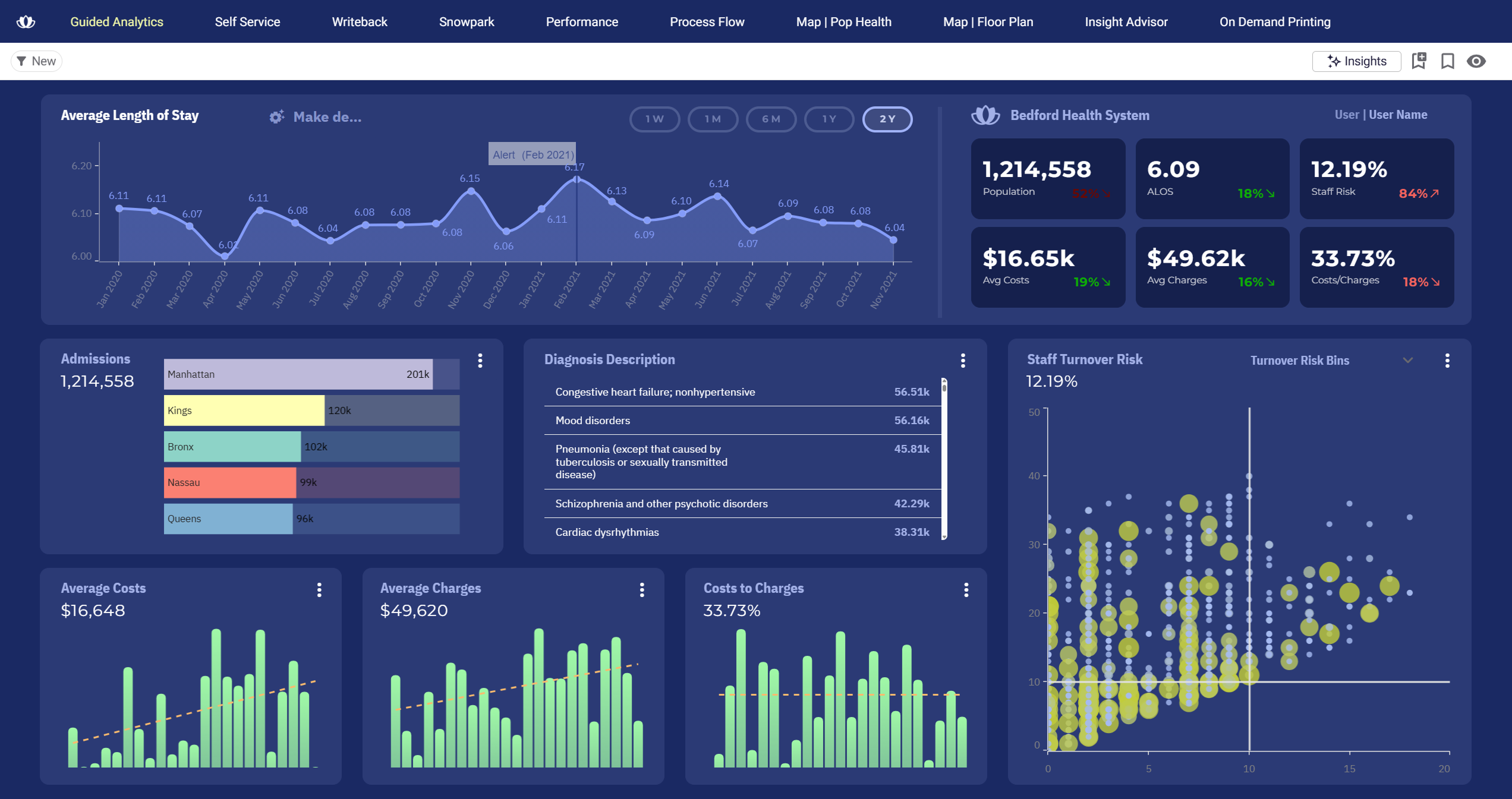
Astrato is designed for teams that have already committed to a cloud data warehouse as their single source of truth. It brings together self-service analytics, embedded analytics, native writeback, and AI-powered insights — all on top of the warehouse, without duplicating or moving data.
It is built for data teams, business users, and product teams who need more than read-only dashboards.
What is Looker?
Looker is a business intelligence platform built around LookML, a proprietary modeling language that defines metrics, dimensions, and data relationships. It connects to cloud warehouses and queries data live, which means no data is cached or extracted by default.

Looker's semantic layer is its main strength. Metrics are defined once in LookML and reused across reports and dashboards. This creates consistency, but it also means that self-service is limited to what has already been modeled. Questions outside the model go back to the data team.
Looker is part of Google Cloud and integrates closely with the GCP ecosystem, including Gemini for AI capabilities.
Architecture: where the real difference lives
The biggest difference between Astrato and Looker is not about features. It is about where business logic lives and how data flows through each system.
Looker: LookML as the modeling layer
Looker queries live from the warehouse, but the business logic — metrics, joins, dimension definitions — lives in LookML models that sit outside the warehouse. Building and maintaining these models requires engineering time.
“Once your body of LookML grows beyond a certain size, there’s no clear architectural framework on offer to make it consistent. So there’s a risk of spaghetti code and poor maintainability.”
Mid-Market (51-1000 emp.)
Every new question that falls outside the existing model needs a developer to extend it. This creates a bottleneck that limits how fast business users can explore data independently.
Astrato: warehouse-native, zero-copy
Astrato treats your cloud data warehouse as the execution layer. Analytics, governance, and logic all run where your data already lives. Nothing is extracted, copied, or duplicated.
Astrato's built-in semantic layer sits inside the warehouse environment. Metrics are defined once and reused everywhere — without a separate modeling workflow, redeploy cycles, or engineering dependencies. Business users can build reports on governed metrics directly, without SQL knowledge.
Self-service analytics: who can actually use it?
Self-service is where Looker and Astrato diverge most sharply in day-to-day use.
In Looker, self-service is real, but it is bounded by the LookML model. Business users can explore within what has been modeled. When they hit the edge of the model, they stop. The request goes to the data team.
“While it is self-service, there are areas that are a little bit more challenging and technical, and because I’m not the most technical end user, I’m not able to solve it on my own. I require assistance. So I think Looker is definitely a tool that requires a little bit more tech savviness to be able to solve some of the more complex issues.”
Senior Customer Success Manager
Astrato removes that boundary. Business users get a drag-and-drop interface to build their own views, apply filters, and explore data without writing SQL or filing a ticket. The semantic layer keeps governance intact. Analysts are not out of the picture — they just stop spending their time building basic dashboards.
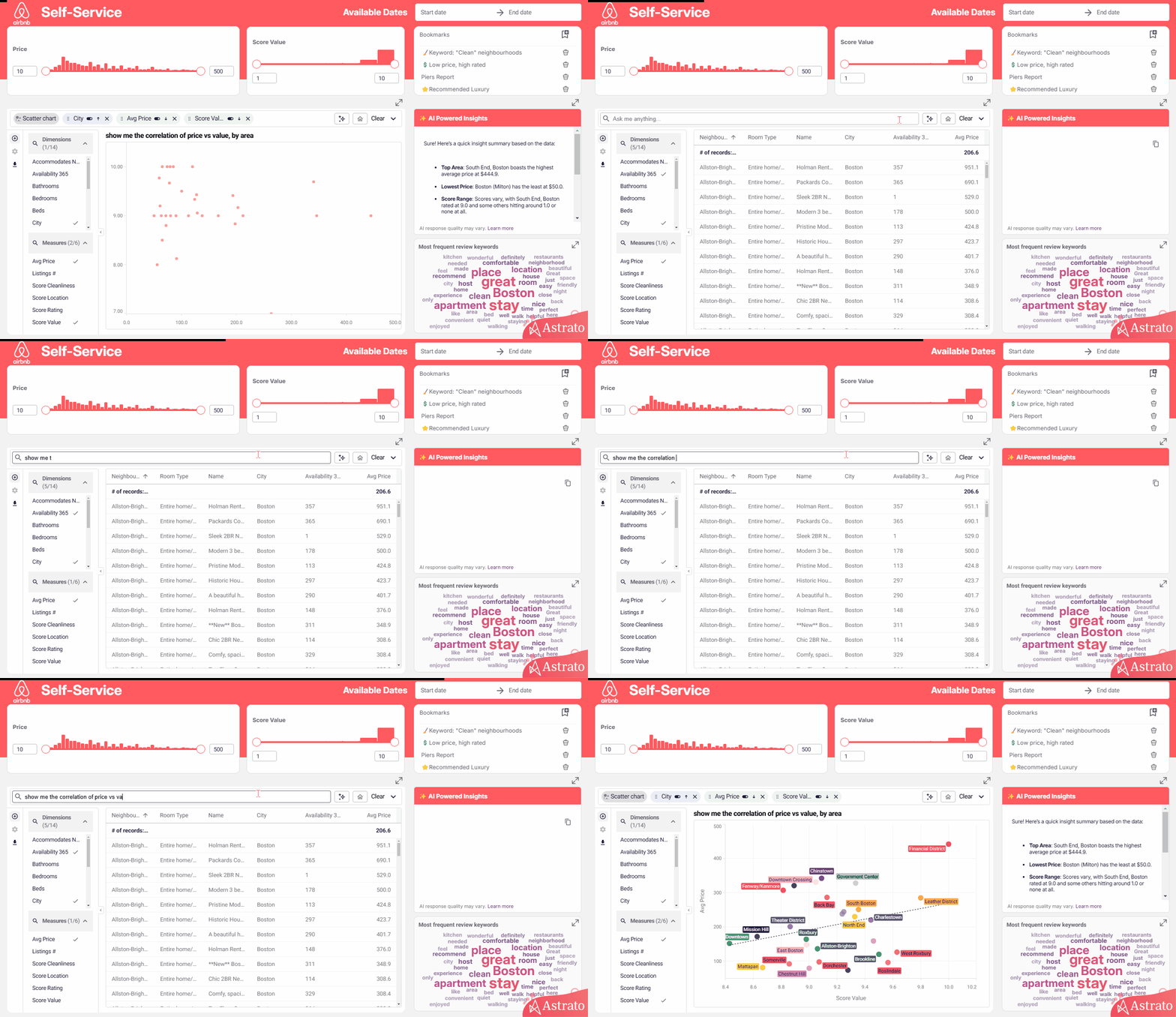
For non-technical users, this matters a lot. The difference between a self-service tool that works for 80% of questions and one that works for 95% is often the difference between teams that adopt it and teams that go back to spreadsheets.
Embedded analytics: building analytics into your product
This is where Astrato is purpose-built and Looker requires more configuration.
Looker offers embedded analytics, but scaling it typically involves per-seat licensing, additional configuration, and meaningful developer effort. White-labelling is available but not default.
Astrato is designed from the ground up for embedded analytics and customer-facing analytics. White-labelling is on by default. Pricing is usage-based, which means you are not paying per viewer as your customer base grows.

Product teams can embed full dashboards, individual charts, or complete analytics experiences via iframe or API. The result looks and feels like part of your product — not a third-party BI tool that has been bolted on.
For SaaS companies and teams building customer-facing data products, this is often the deciding factor.
Writeback: from insight to action
Most BI tools are read-only. You analyze data, draw conclusions, and then go somewhere else to act on them. That gap creates friction which often means lost context.
Looker is primarily read-only. Acting on data requires external tools or custom integrations.
Astrato includes native writeback as a core capability. Users can update forecasts, submit approvals, adjust records, and trigger workflows directly from dashboards. Changes persist to the warehouse instantly with full audit trails.
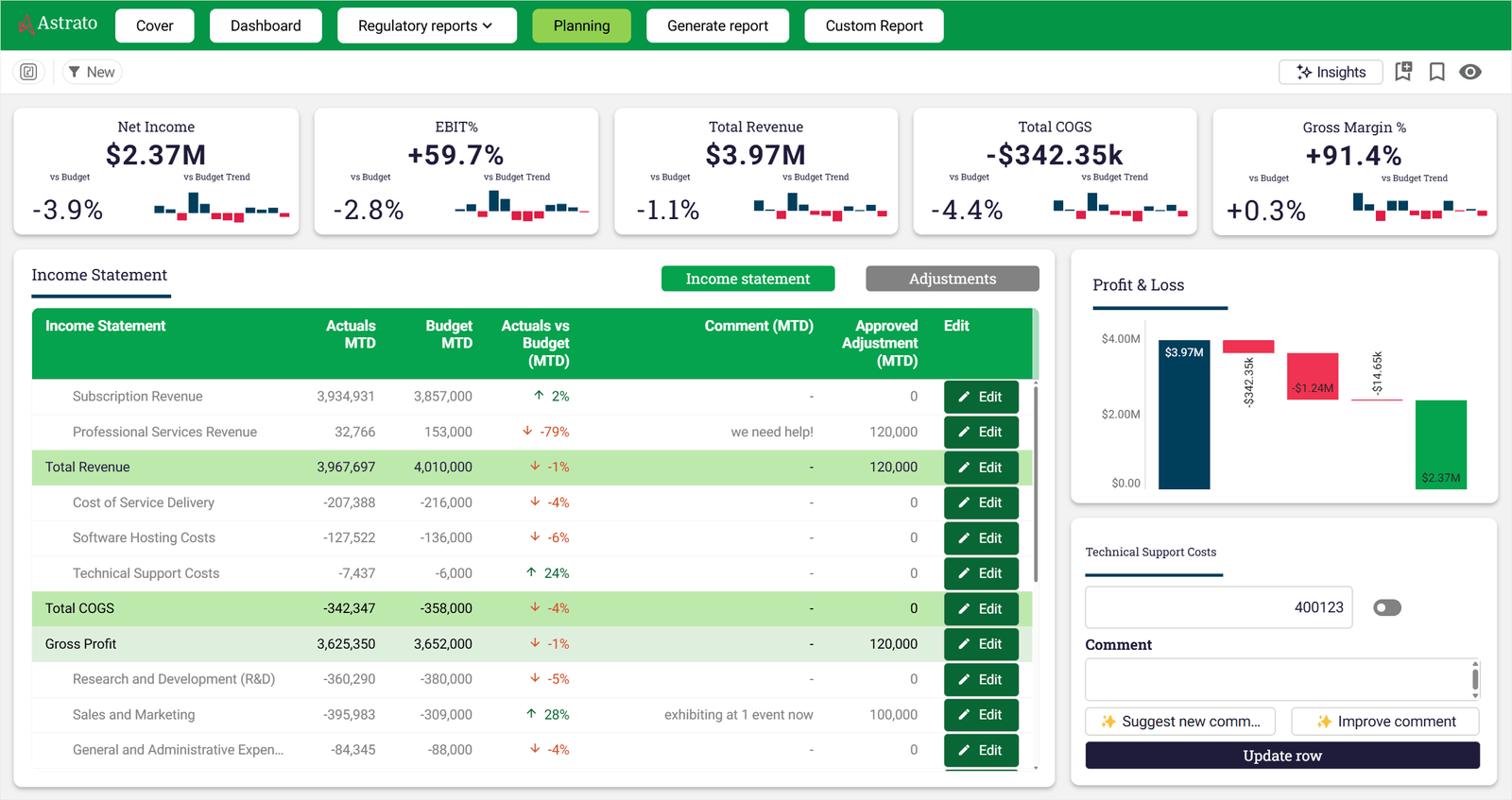
This turns dashboards into operational interfaces that not only let you read data, but also act on it. For finance teams managing forecasts, operations teams adjusting plans, or any workflow that involves both analyzing and updating data, this removes a significant step.
AI-powered analytics: native vs ecosystem-tied
Looker's AI capabilities are tied to Gemini and the GCP ecosystem. If your team lives in Google Cloud, this is a reasonable fit. If not, it limits your options.
Astrato's AI capabilities connect to the semantic layer, which gives AI the business context it needs to return accurate answers. Without that context, natural language queries often produce wrong or misleading results — the model does not know what “active users” or “net revenue” means for your specific business.
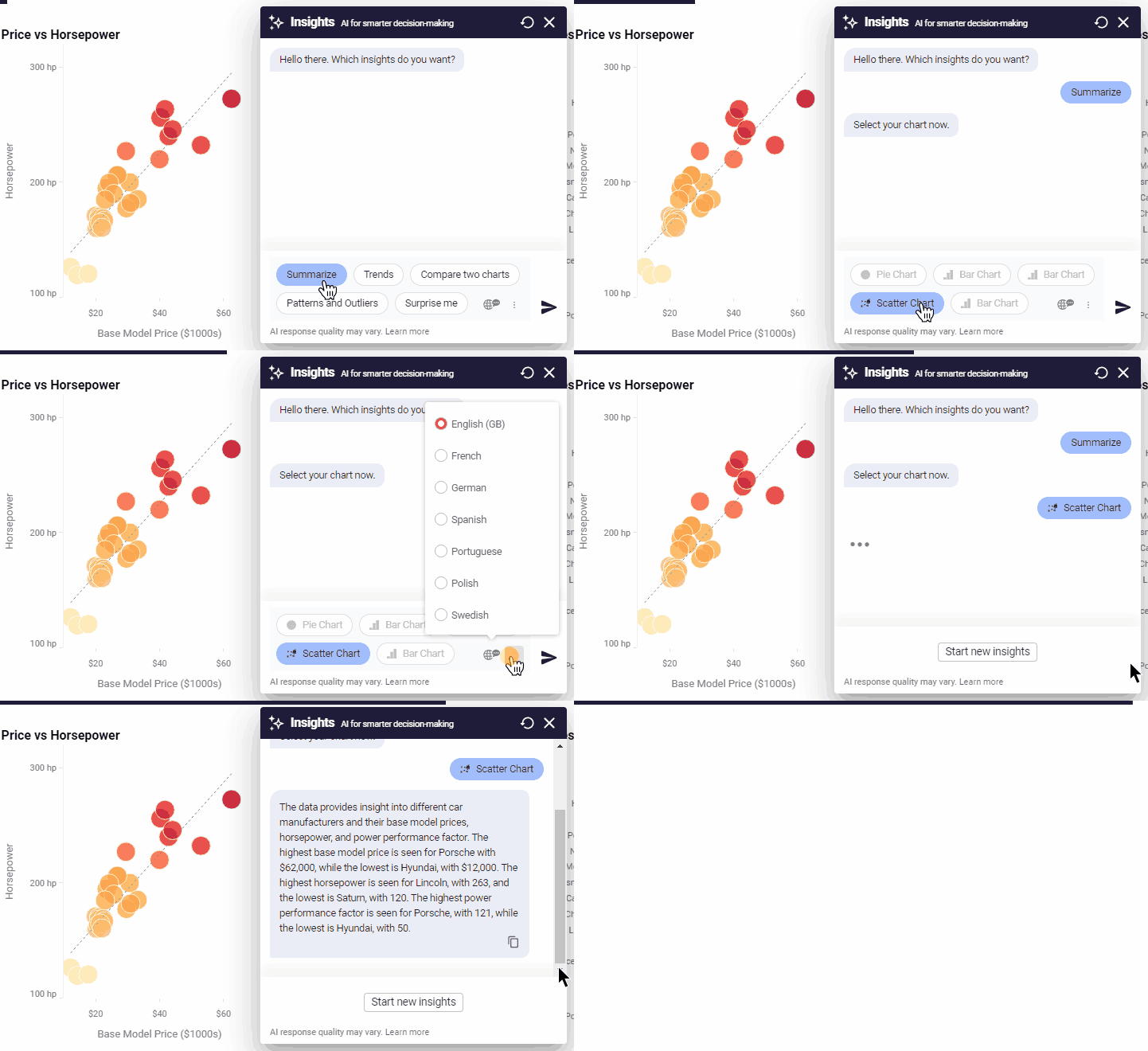
Astrato works with OpenAI, Google Gemini, Snowflake Cortex, or your own LLM. Business users can ask questions in plain language and get visualizations back. Executives can receive AI-generated commentary alongside dashboards. The AI is grounded in governed data, which keeps it accurate.
Scheduled reporting: automating delivery
Astrato includes scheduled reporting that lets teams automate the delivery of pixel-perfect PDFs, PowerPoint decks, or Excel reports to stakeholders on a set cadence. This is especially useful for finance teams sending board decks, customer success teams sharing client updates, or compliance teams exporting audit-ready reports.
Reports are generated from live warehouse data, so they are always current at the time of delivery.
Dashboards and data visualization
Both platforms offer strong dashboarding and data visualization capabilities. Looker provides a clean, governed exploration interface that works well for structured analysis. Astrato adds pixel-perfect design flexibility, which matters for teams building customer-facing or embedded products where the dashboard needs to match a specific brand.
“Looker offers strong analytical capabilities, but there are a few areas where it could work better. The platform can have a learning curve, especially for users who are new to BI tools or need to create more advanced reports and dashboards.”
Mechanical Design Engineer
Astrato's drag-and-drop interface lowers the bar for building dashboards without sacrificing the ability to go deep with SQL when needed. Both platforms can handle complex datasets and complex data relationships.

Who should choose Astrato?
Astrato is a strong fit for teams that:
- Run on Snowflake, BigQuery, or Databricks and want analytics to live where their data does
- Need self-service analytics that works without a LookML model gate
- Are building customer-facing or embedded analytics into a product
- Want dashboards that enable action — not just insight — through native writeback
- Expect AI-powered insights grounded in governed, warehouse-native data
“Astrato stands out as a remarkably intuitive platform that strikes an excellent balance between flexibility and powerful data analysis capabilities. It enables users to explore and visualize data freely while still maintaining strong analytical depth and precision, so you don’t have to trade ease of use for rigorous insights.”
Data Analyst
Who should choose Looker?
Looker is a strong fit for teams that:
- Are deeply invested in the Google Cloud ecosystem and want tight Gemini integration
- Have an engineering team available to build and maintain LookML models
- Need a governed, model-driven exploration experience for analysts
- Are not yet prioritizing writeback or operational workflows
Astrato vs Looker at a glance
Here's a side-by-side view of how the two platforms compare across key capabilities.
|
Capability |
Looker |
Astrato |
|
Live warehouse queries |
✓ Live queries to the warehouse |
✓ Live queries, zero-copy, no extract layer |
|
Semantic layer |
LookML — developer-managed, proprietary modeling language |
✓ Built-in, business-accessible — no proprietary language required |
|
Setup time |
Months — LookML model must be built before self-service is possible |
✓ Days — connect to your warehouse and start immediately |
|
Self-service BI |
Model-dependent — questions outside LookML go back to the data team |
✓ Fully accessible — drag-and-drop for all users, no model gate |
|
Writeback |
Limited via integrations — no native writeback |
✓ Native writeback — update records and forecasts directly from dashboards |
|
Embedded pricing |
Quote-based — platform fee plus per-user licensing |
✓ Usage-based — no per-viewer fees as your customer base grows |
|
White-labelling |
Available — requires configuration |
✓ Default — pixel-perfect branding with no Astrato chrome |
|
Multi-tenancy |
Requires setup — not built in by default |
✓ Built-in — row-level security and per-user isolation by design |
|
AI analytics |
Gemini (GCP ecosystem) — tied to Google Cloud |
✓ Multi-LLM — OpenAI, Gemini, Snowflake Cortex, or bring your own |
|
Data duplication |
Possible depending on setup — modeled layers outside the warehouse |
✓ None — zero-copy architecture, your warehouse stays the single source of truth |
When to consider switching from Looker to Astrato
Some teams find Looker's model-first approach works well for years — until the cracks start showing. The signals worth paying attention to include:
- Self-service requests keep landing back with the data team because the LookML model has not caught up
- Your warehouse is the single source of truth, but your BI tool is adding an extra layer on top of it
- You are building customer-facing analytics and need white-labelling, usage-based pricing, and multi-tenancy without heavy engineering overhead
- You need AI-powered analytics that is not locked into the GCP ecosystem
- Your teams need to act on data — update forecasts, approve workflows — without switching tools
“Pixel-perfect visualizations that consistently impress our executive team. The write-back and action features are highly valued, and it’s very intuitive to build advanced data apps for both technical and non-technical users.”
Director of Operations
See Astrato in action
If you are evaluating BI platforms for a warehouse-native environment, the best way to assess fit is to see it live on your own data.
Astrato connects directly to Snowflake, BigQuery, or Databricks. Setup takes days, not months. And you can start with the use cases that matter most to your team — whether that is self-service analytics, embedded data products, operational writeback, or AI-powered reporting.
Book a demo or start a free trial to explore how Astrato runs analytics where your data already lives.
Ready to experience next-gen analytics?
See how Astrato runs natively in your warehouse.